Art

Chinese Fan Painting

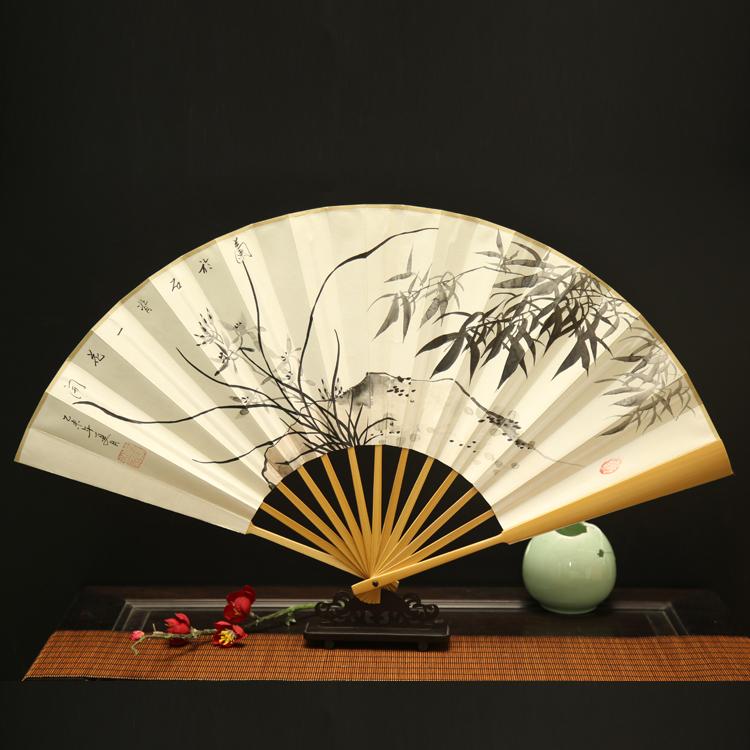
Chinese fan painting turns a handheld object into a canvas — compositions shaped by the fan's curve, from centered round-fan flowers to arc-flowing landscapes on folding fans.

Chinese fan painting with ink brushwork

In this guide, “Chinese fan” refers to the traditional hand fan (扇子) — not fan culture or the surname Fan.

What this guide covers

The outline

  1. 01The fan as a unique canvas
  2. 02Formats: the fan-shaped composition
  3. 03Brush, ink and color
  4. 04Master painters of fan paintings
  5. 05How fan paintings are mounted and kept
  6. 06Trying it yourself
  7. 07Frequently asked questions

Section 01

The fan as a unique canvas

Chinese fan painting is painting on a canvas you can hold in one hand — and that changes everything. The surface is small, curved and meant to be seen close, so the artist works with unusual economy: every stroke must earn its place. A good fan painting reads clearly at arm's length and rewards a second look up close.
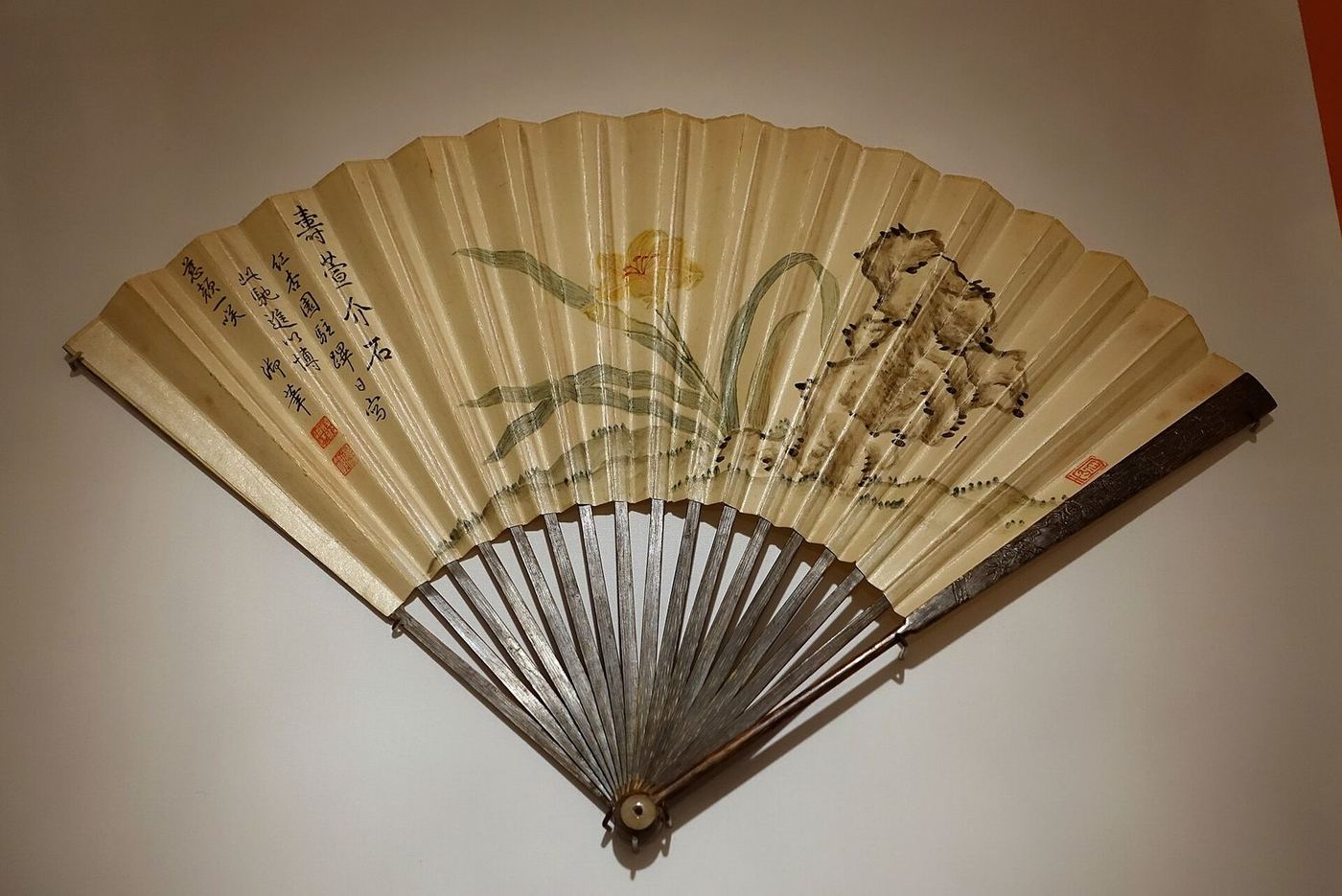
Fan painting is a branch of Chinese fan art, which pairs the image with calligraphy. This page covers the painting side: formats, brushwork, masters and conservation.
Section 02

Formats: the fan-shaped composition

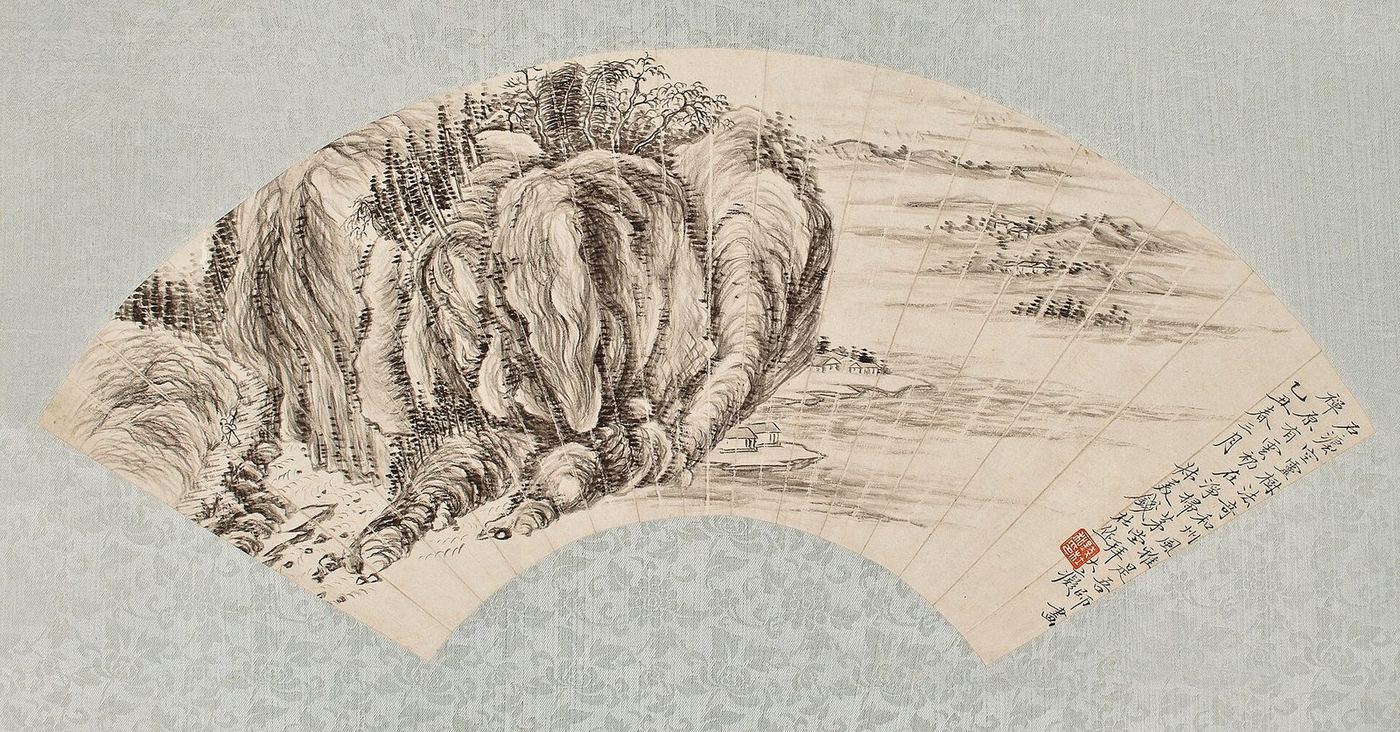
The fan's shape dictates its composition. On a round fan, the painter centers the subject — a spray of flowers, a bird, a figure — and lets empty space carry the rest, like a moon in a sky. On a folding fan, the composition follows the arc: landscapes climb toward the outer edge, water and mist sit low, and the pleats break the surface into vertical panels the painter must respect.

  • Round fan — one centered subject, generous empty space (留白, liúbái).
  • Folding fan — diagonal or curved landscapes that flow with the arc.
  • Bamboo, orchid and plum — vertical subjects that suit the folding fan's pleats.
  • Birds and insects — small subjects that reward the close viewing distance.

Section 03

Brush, ink and color

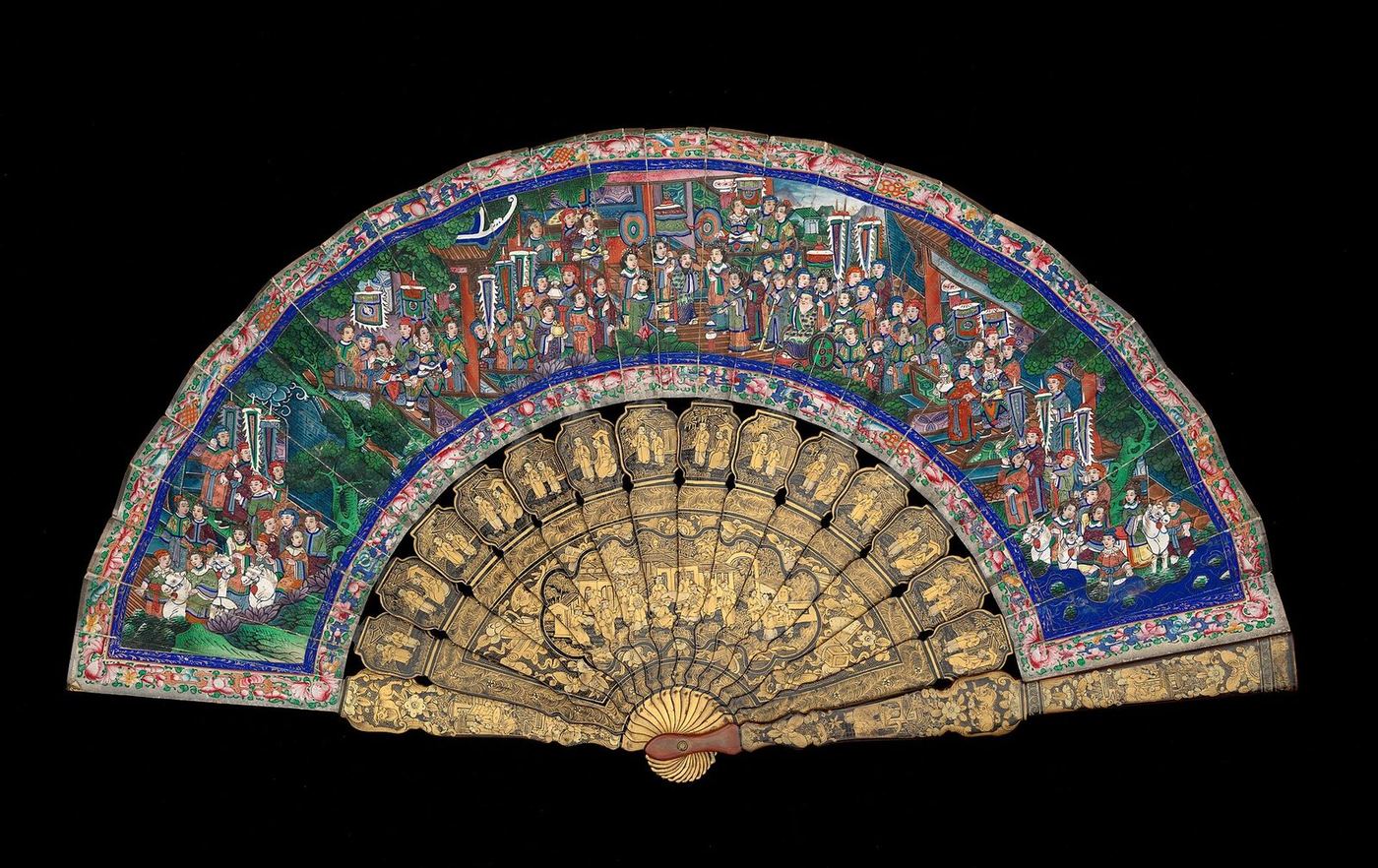
Fan painting uses the full Chinese brush vocabulary. Ink wash (水墨) gives landscapes their mist and depth; fine brushwork (gongbi, 工笔) renders petals and feathers in precise detail; freehand (xieyi, 写意) captures bamboo or plum in a few swift strokes. Mineral pigments — cinnabar red, azurite blue, malachite green — add color to flowers and figures.

The surface matters as much as the brush. Paper must be sized so ink does not bleed through the pleats, and silk needs a careful ground. These are the same materials described in the paper fan and silk fan guides — the craft and the art are inseparable.

Section 04

Master painters of fan paintings

The history of fan painting runs through the same names as the history of Chinese painting. Emperor Huizong of the Song set the standard for round-fan compositions of birds and flowers. In the Ming dynasty, the Wu School masters — Shen Zhou, Wen Zhengming and Tang Yin — turned the fan into a serious genre, and their fan paintings survive in museums worldwide.

The Ming period is also where fan painting and calligraphy became inseparable: a fan with a painted landscape and a poem in running script is the classic literati object. For the era's context, see Chinese fans in the Ming dynasty.

Section 05

How fan paintings are mounted and kept

Most surviving fan paintings no longer live on fans. Collectors and museums detach the painted face from its ribs and mount it into an album (扇面册, shànmiàn cè) or a hanging scroll, where it can be stored flat, protected from creases and displayed without damaging the paper.

  • Album mounting — the standard museum format; pages can be turned like a book.
  • Scroll mounting — a fan painting stretched as a hanging scroll for display.
  • Keep out of direct sun and away from humidity — pigments and paper both fade and spot.
  • Handle by the edges; natural skin oils mark silk and sized paper.

Section 06

Trying it yourself

  • Start on paper, not silk — practice strokes and composition before committing.
  • Choose one simple subject: bamboo, orchid, or a single branch of plum.
  • Use a real fan-shaped practice sheet to learn how the pleats interrupt the image.
  • Copy a classic composition first; fan painting is a tradition of learning by copying.
  • Pair your painting with two lines of calligraphy to complete the literati format.

If you would rather own than paint, the difference between a hand-painted fan and a printed one is the difference between art and souvenir — and it shows up in price. See handmade Chinese folding fans for what handwork costs and how to recognize it.

Section 07

Frequently asked questions

What is fan painting in Chinese art?

Fan painting is the Chinese tradition of painting on the surface of a round or folding fan. It uses the same brush, ink and pigment as scroll painting but works in a small, curved format, often pairing the image with calligraphy.

How do you paint on a fan?

Artists size the paper or silk so the ink will not bleed, then compose to the fan's shape — centered subjects on round fans, arc-following landscapes on folding fans. The main styles are fine brushwork (gongbi) and freehand (xieyi).

What materials are used for fan painting?

Fan painting uses ink, mineral pigments and the same brushes as scroll painting, on sized paper or silk. The paper or silk must be prepared so the pleats do not distort the image.

Can I paint on a fan myself?

Yes — beginners are advised to start on paper with a simple subject such as bamboo or orchid, practice on fan-shaped sheets, and copy classic compositions before working on a real fan.