Types

Chinese Silk Fans

A Chinese silk fan is a hand fan with a luminous silk leaf — from the round tuánshàn of the palace to hand-painted silk folding fans. Learn the craft, how to spot real silk, and how to care for it.

Classical Chinese round silk fan with a painted scene

In this guide, “Chinese fan” refers to the traditional hand fan (扇子) — not fan culture or the surname Fan.

What this guide covers

The outline

  1. 01Why silk? A material made for fans
  2. 02Round silk fans and the tuánshàn tradition
  3. 03Hand-painted silk folding fans
  4. 04How silk fans are made
  5. 05How to spot real silk
  6. 06Caring for a silk fan
  7. 07Frequently asked questions

Section 01

Why silk? A material made for fans

A Chinese silk fan is a hand fan whose leaf is made of silk — soft, luminous and fine enough to paint on. Silk changes a fan completely: instead of the crisp utility of paper, it gives a surface that catches light, moves gently and belongs to display as much as to cooling.
Silk was the luxury material of the fan world from early on. White silk round fans were the court fan of the Han dynasty, and painted silk folding fans remain among the most prized types of Chinese fans today.
Section 02

Round silk fans and the tuánshàn tradition

The classic silk fan is the round fan — the tuánshàn (团扇) — a circle of silk stretched over a frame and mounted on a handle. From the Han through the Tang dynasties it was the fan of palace women, and it stayed in use for over a thousand years as the graceful fan of the boudoir.

White silk round fans were called wánshàn (纨扇), and they carried a whole literary tradition with them — Ban Jieyu's poem about a silk fan set aside in autumn became one of the most imitated images in Chinese poetry. For the full story, see Chinese round fans.

Classical Chinese round silk fan with a painted scene
A round silk fan — the classic tuánshàn.

Section 03

Hand-painted silk folding fans

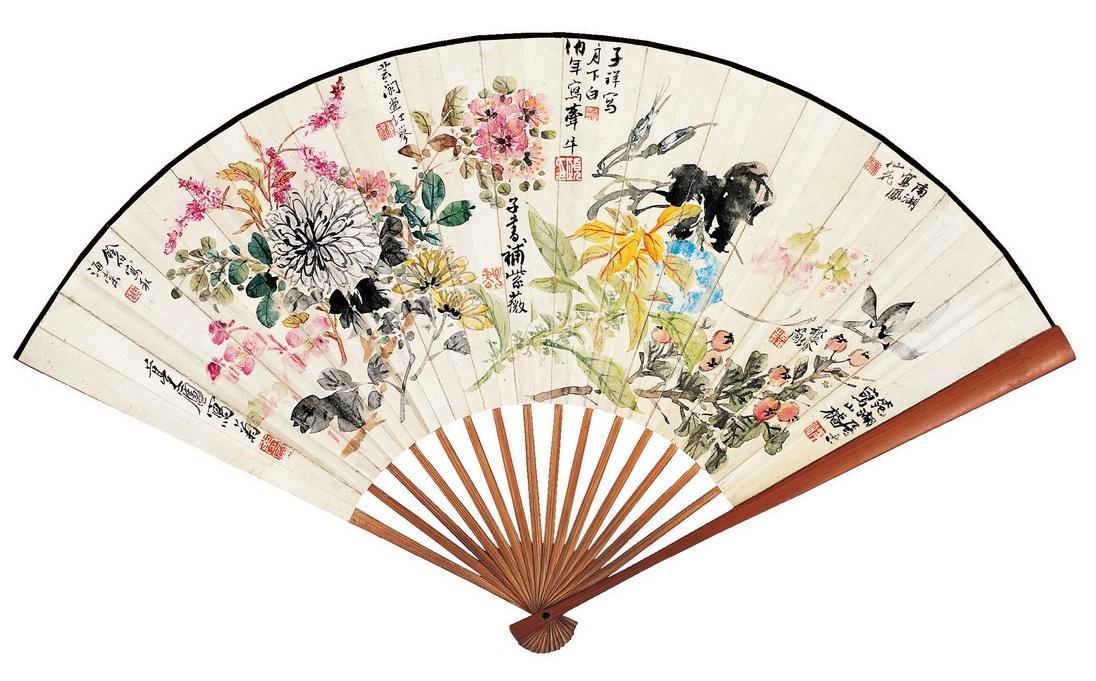
Silk also makes a fine folding-fan leaf. A hand-painted silk folding fan combines the scholar's shape with the painter's surface: the silk takes translucent washes of color that paper cannot, and light passing through the leaf gives the painting a soft glow.

Because silk is delicate, silk folding fans are usually display and gift pieces rather than daily carriers. They pair naturally with Chinese fan painting and are a favorite choice for wedding and gift fans.

Section 04

How silk fans are made

  • Weaving — fine silk or gauze is woven, sometimes with patterns woven in.
  • Sizing — the silk is treated so paint sits on the surface without bleeding.
  • Stretching — round fans stretch the leaf over a bamboo or wooden frame.
  • Painting — flowers, figures or landscapes are painted by hand, often in fine brushwork.
  • Mounting — folding fans pleat the silk over ribs; round fans fix it to the frame and handle.

The craft depends on the same workshops that make other fans — see handmade Chinese folding fans for what handwork involves and what it costs.

Section 05

How to spot real silk

  • Look at the weave — real silk has fine, irregular natural fibers; synthetics look perfectly uniform.
  • Feel the surface — silk is soft and warm; polyester feels slick and slightly cold.
  • Check the price — real silk with hand painting costs real money; very cheap “silk fans” are almost always synthetic.
  • Burn test (on a loose thread) — real silk smells like burnt hair and leaves a fine ash; synthetics melt and bead.
  • Ask — a maker who can tell you the weave, weight and origin of the silk is usually telling the truth.

The same verification habit applies to every material — the buyer's checklist in authentic Chinese folding fans walks through it step by step.

Section 06

Caring for a silk fan

  • Keep silk fans dry — damp silk stains and loses its tension.
  • Avoid direct sun — dyes and pigments fade quickly in strong light.
  • Store round fans flat or hanging, away from pressure that could bend the frame.
  • Handle by the ribs or handle, not the silk; oils and moisture mark the surface.
  • For silk folding fans, open and close along the pleats and never force the leaf.

A cared-for silk fan is an heirloom object. If you are choosing between silk and paper, the short rule is: paper for daily use, silk for display and gifts — and silk for anyone who loves Chinese fan art.

Section 07

Frequently asked questions

What is a Chinese silk fan?

A Chinese silk fan is a hand fan with a silk leaf — most often a round fan (tuánshàn) or a hand-painted silk folding fan. Silk gives the fan a soft, luminous surface that takes painting beautifully.

What is the difference between a silk fan and a paper fan?

Silk is softer, finer and more expensive, with a luminous look that suits display and gifts. Paper is lighter, cheaper and more durable for daily use, and takes printing and painting equally well.

How can you tell if a fan is real silk?

Real silk has an irregular natural weave, feels soft and warm, and costs more. A loose-thread burn test also works: silk smells like burnt hair and leaves fine ash, while synthetics melt into beads.

How do you care for a silk fan?

Keep silk fans dry, out of direct sunlight, and handle them by the ribs rather than the leaf. Store round fans flat or hanging so the frame is not bent, and open folding fans gently along the pleats.