Core

Chinese Folding Fans

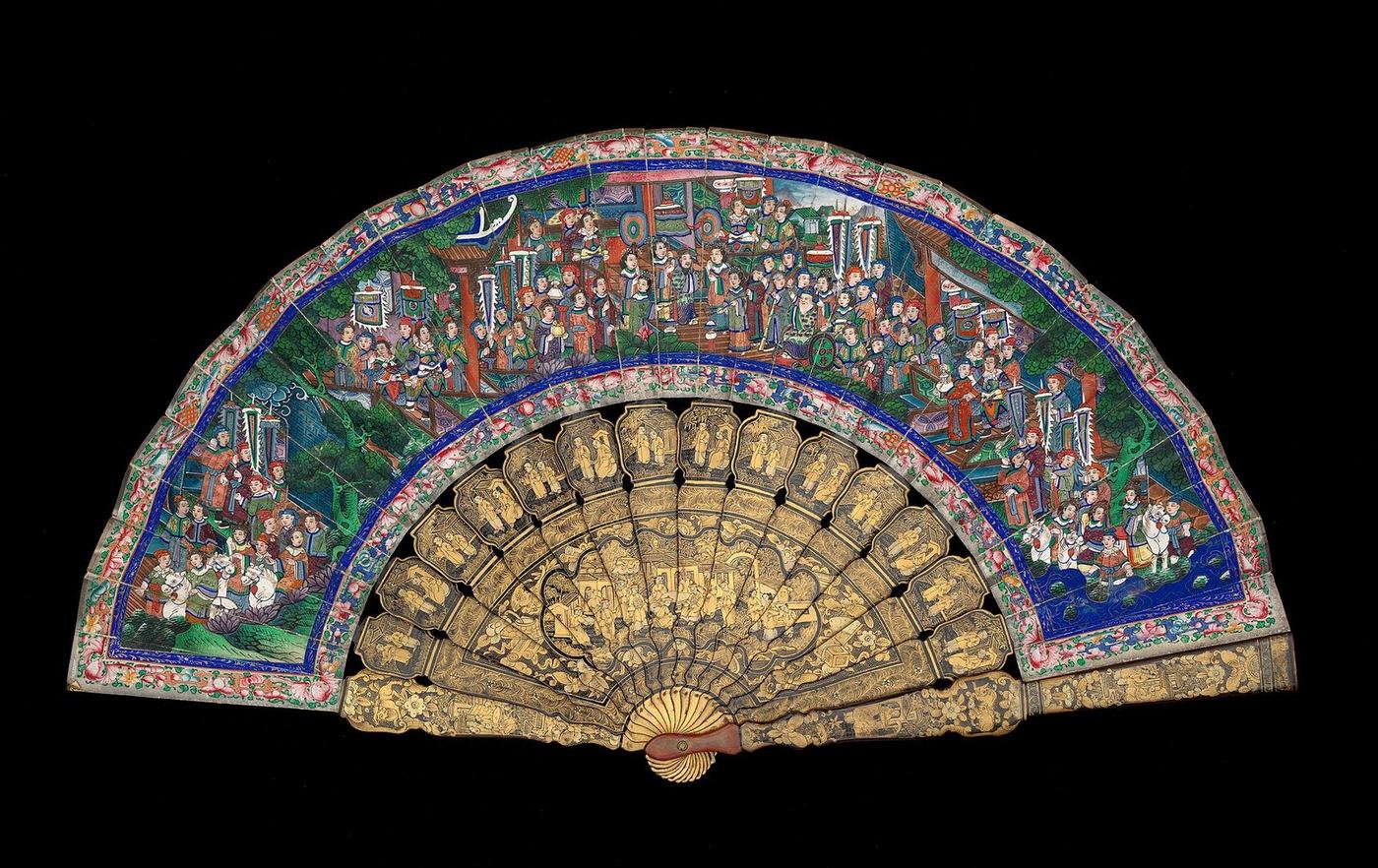
The Chinese folding fan (折扇, zhéshàn) is a collapsible hand fan of pleated paper or silk spread across bamboo, sandalwood or wooden ribs. It folds flat into a sleeve, opens with a flick of the wrist, and carried the art of the literati for centuries.

Chinese folding fan decorated with landscape painting and calligraphy

In this guide, “Chinese fan” refers to the traditional hand fan (扇子) — not fan culture or the surname Fan.

What this guide covers

The outline

  1. 01What is a Chinese folding fan?
  2. 02Anatomy: ribs, leaf, guard sticks and tassels
  3. 03A short history of the folding fan
  4. 04Materials: bamboo, sandalwood, silk and paper
  5. 05Common motifs and their meanings
  6. 06How to choose and care for one
  7. 07Frequently asked questions

Section 01

What is a Chinese folding fan?

A Chinese folding fan is a collapsible hand fan: a pleated leaf of paper or silk spread across slender ribs that all turn on a single rivet. Closed, it folds flat enough to slip into a sleeve; open, it locks into a half-circle of painted surface. In Mandarin it is a zhéshàn (折扇) — the fan that folds.
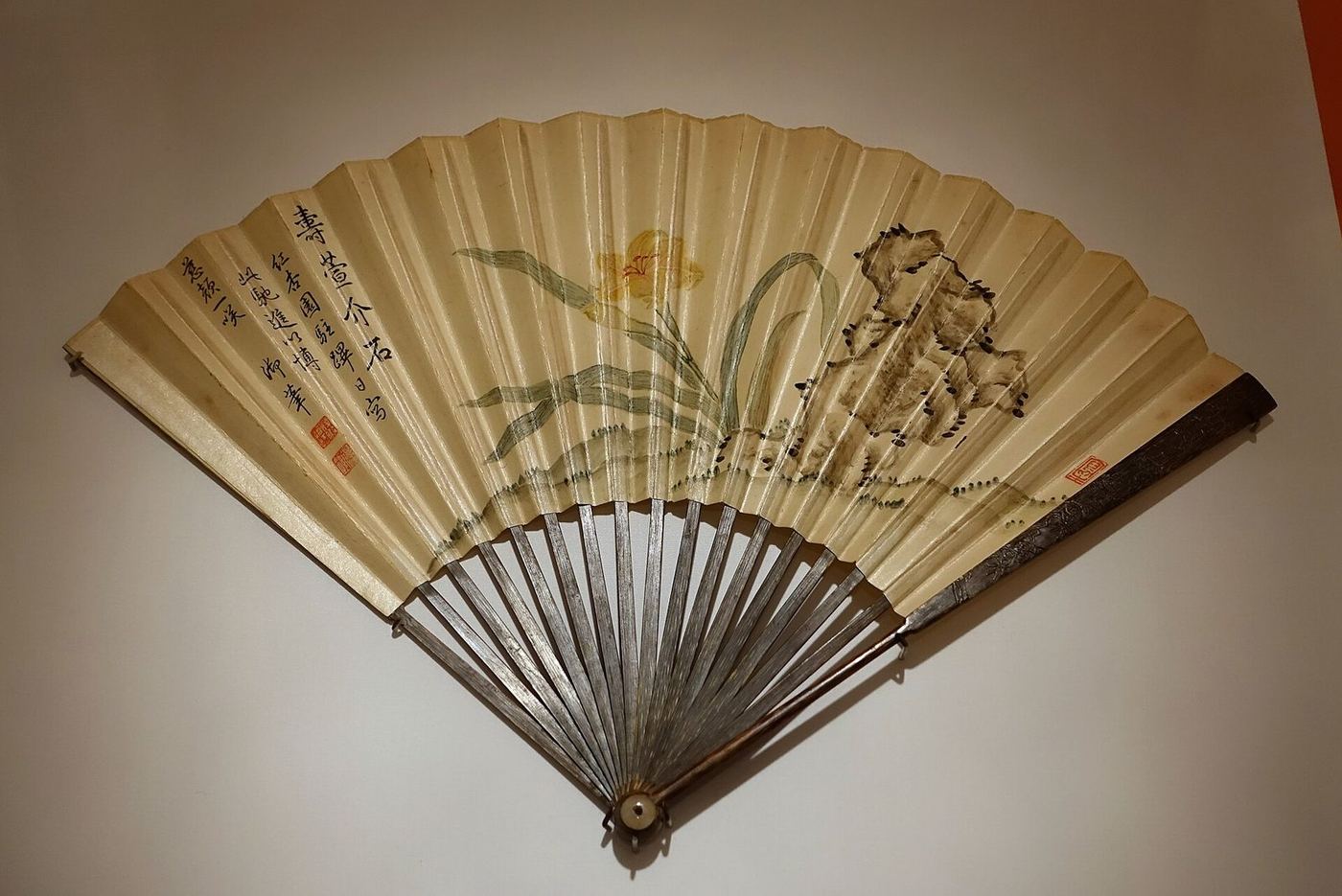
The folding fan is the best-known Chinese fan in the West, and it is easy to see why. It opens with one hand, carries painting and calligraphy, and collapses out of the way when you do not need it. That combination of art and practicality made it the central fan of the scholar class — and the natural hub of any modern collection of types of Chinese fans.
Section 02

Anatomy: ribs, leaf, guard sticks and tassels

A folding fan is simple to understand once you know its five parts. The names below are the ones you will meet in museums, auction listings and maker descriptions.

  • Ribs (扇骨, shàngǔ) — the thin slats that support the leaf; usually bamboo, sometimes sandalwood, rosewood or ivory in antique fans.
  • Leaf (扇面, shànmiàn) — the pleated surface of paper or silk, painted, calligraphed, or printed.
  • Guard sticks (大骨, dàgǔ) — the two thicker outer ribs that protect the leaf when closed.
  • Rivet (扇钉, shàndīng) — the pin at the base that the ribs turn around; a well-set rivet opens and closes smoothly.
  • Tassel (扇坠, shànzhuì) — a decorative cord and knot hung from the rivet, often jade or silk.
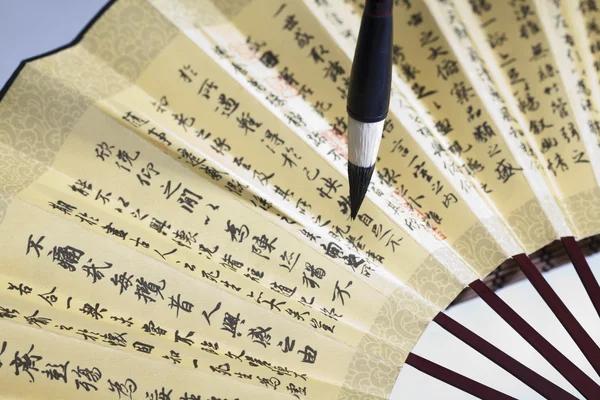
Close-up detail of Chinese folding fan ribs and painted leaf
Ribs, leaf and guard sticks — the anatomy of a folding fan.

Section 03

A short history of the folding fan

Where the folding fan was invented is still debated. Historians note that folding fans reached the Chinese court through tribute missions from Japan and Korea as early as the Song dynasty, while some Chinese traditions claim an earlier home origin. What is not in dispute is what happened next: by the Ming dynasty the folding fan had become the scholar's own.

Ming and Qing literati kept folding fans tucked in their sleeves — hence the nickname 怀袖雅物 (huáixiù yǎwù), “a refined object for the sleeve” — and treated the leaf as a small canvas for poetry and landscape. Later, workshops in Canton and Suzhou exported painted and sandalwood fans to Europe, where the “Chinese fan” became a fashionable accessory in its own right. For the full timeline, see the history of the Chinese folding fan.

Section 04

Materials: bamboo, sandalwood, silk and paper

MaterialWhere it is usedCharacter
BambooRibsLight, springy, affordable — the classic choice
SandalwoodRibsFragrant and premium; a specialty of Suzhou and Hangzhou
PaperLeafMost common; takes paint and calligraphy well
SilkLeafLuminous and soft; often hand-painted
Wood (rosewood, huanghuali)RibsDense, dark and prized by collectors
Common materials in a Chinese folding fan

For most buyers the practical question is bamboo versus sandalwood ribs, and paper versus silk leaf. Bamboo-and-paper is the traditional workhorse; sandalwood adds fragrance and weight; silk turns the fan into a display piece. Our guides to bamboo fans and silk fans go deeper into each material.

Section 05

Common motifs and their meanings

Almost every painted folding fan carries a wish. The motifs are a visual language, and reading them is half the pleasure of owning a fan:

  • Lotus — purity, rising clean from the mud.
  • Plum blossom — resilience; it blooms in late winter.
  • Bamboo — integrity, the scholar's own plant.
  • Orchid — elegance and refinement.
  • Peony — wealth and honor.
  • Crane — longevity.
  • Dragon — power and authority.
  • Phoenix — harmony and virtue.
  • Fish — abundance; 鱼 (yú) sounds like 余, “surplus.”

The full picture is in our visual dictionary of Chinese fan motifs and the deeper guide to Chinese fan symbolism.

Section 06

How to choose and care for one

  • Decide the use first — daily carry, display, gift or performance — because it drives everything else.
  • Choose size and rib count: more ribs mean finer pleats and a wider arc; typical fans run from 7 to 20 or more ribs.
  • Pick the material pair (bamboo or sandalwood ribs; paper or silk leaf) to match the budget and occasion.
  • Prefer hand-painted leaves if the fan is a gift or collectible; printed fans are fine for casual use.
  • Store the fan closed, dry and away from direct sun; paper and silk both age badly in humidity.
  • Open gently, pushing the guard sticks apart rather than forcing the leaf.

Need help narrowing it down? Start with how to choose a Chinese folding fan, check what authentic handmade fans should cost, and see folding fan prices before you buy.

Section 07

Frequently asked questions

What is a Chinese folding fan called?

In Mandarin it is a zhéshàn (折扇) — “folded fan.” In English it is also called a pleated fan. The word shànzi (扇子) is the general word for any hand fan.

How many ribs does a folding fan have?

Most folding fans have between 7 and 20 or more ribs. More ribs create finer, closer pleats and a wider arc, while fewer ribs keep the fan light and easy to open with one hand.

What is a folding fan made of?

A traditional folding fan uses bamboo, sandalwood or other wood for the ribs, and paper or silk for the pleated leaf. Antique fans occasionally have ivory ribs, but modern buyers prefer sustainable materials.

How do you open a Chinese folding fan?

Hold the rivet end in one hand, push the two guard sticks apart with your thumb, and flick your wrist. The pleats fan out on their own. A step-by-step guide is in how to use a Chinese fan.

Is a Chinese folding fan a good gift?

Yes. In Chinese culture fans are traditional gifts, and the motifs on the leaf carry specific wishes — purity, longevity, success. Our Chinese fan gift guide explains how to match a fan to the occasion.