Types

Chinese Bamboo Fans

A Chinese bamboo fan is the classic of the craft — light, springy ribs that have carried Chinese fans for centuries. Learn how bamboo ribs are made, why bamboo matters in Chinese culture, and how to choose and care for one.

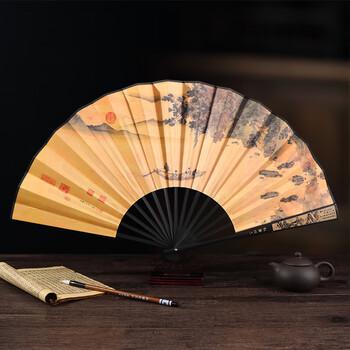
Close-up detail of Chinese fan bamboo ribs and painted leaf

In this guide, “Chinese fan” refers to the traditional hand fan (扇子) — not fan culture or the surname Fan.

What this guide covers

The outline

  1. 01Bamboo and the Chinese fan
  2. 02Choosing bamboo for ribs
  3. 03How bamboo fans are crafted
  4. 04Bamboo vs sandalwood vs ivory
  5. 05Bamboo in symbolism and literature
  6. 06Caring for a bamboo fan
  7. 07Frequently asked questions

Section 01

Bamboo and the Chinese fan

A Chinese bamboo fan is first of all a fan with bamboo ribs — the light, springy framework that supports a paper or silk leaf. Bamboo is the default material of Chinese fan-making, so common that it is easy to overlook, and so good at its job that almost every other material is compared to it.
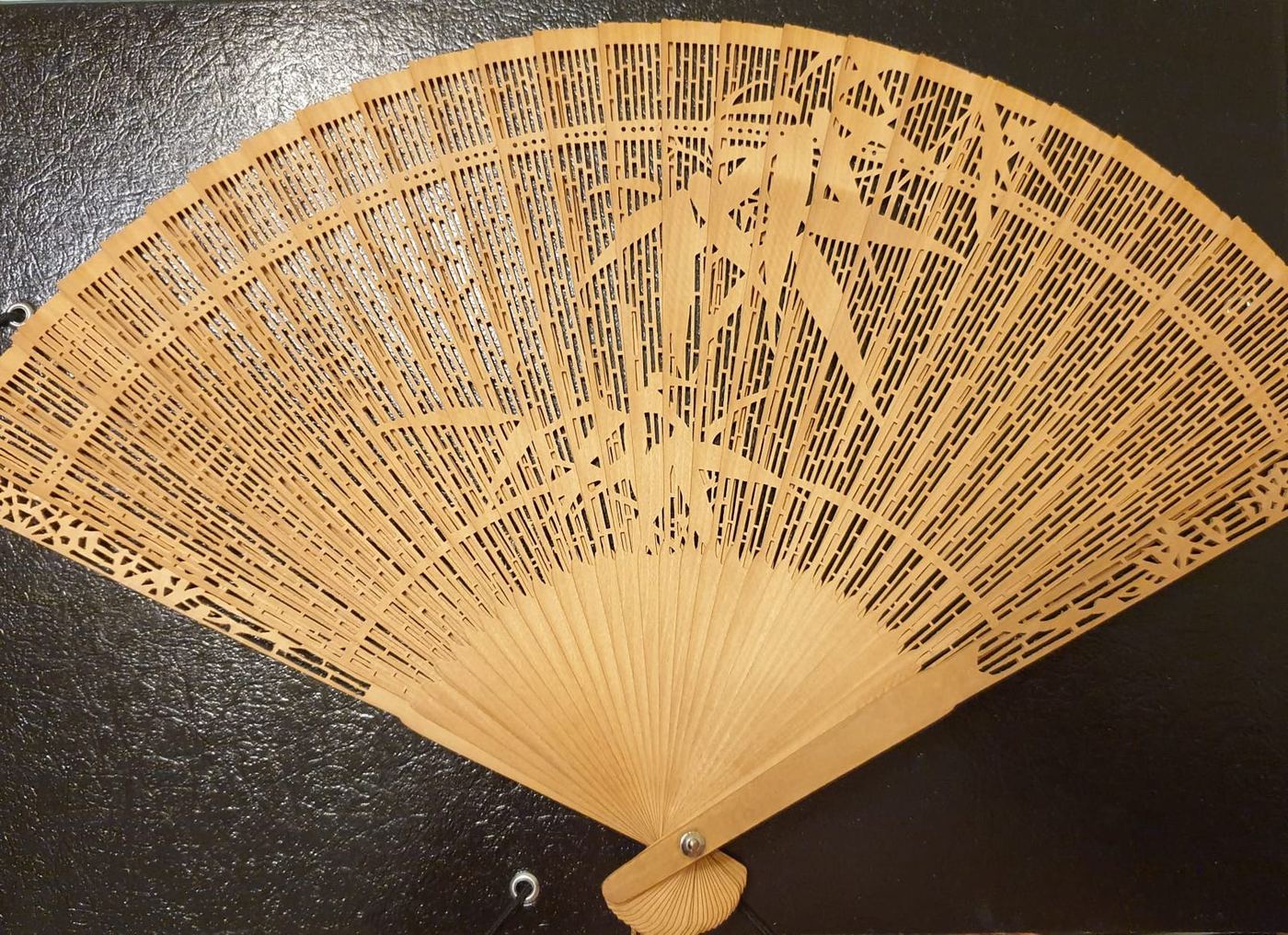
Bamboo fans are among the oldest types of Chinese fans: palm-leaf and bamboo fans served ordinary people for centuries, and bamboo ribs carried the scholar's folding fan through its golden age in the Ming dynasty.
Section 02

Choosing bamboo for ribs

  • Moso bamboo (毛竹) — the everyday workhorse: strong, straight and affordable.
  • Spotted bamboo (湘妃竹) — the mottled “teardrop” bamboo, traditionally the most prized rib material.
  • Age of the bamboo — mature stalks are denser and hold their shape; young bamboo warps.
  • Season — bamboo cut in winter is said to resist insects better than summer-cut stalks.
  • Grain and flexibility — good ribs flex without cracking and spring back straight.

The classic recipe pairs bamboo ribs with a paper leaf — the combination behind most Chinese folding fans. Spotted bamboo ribs are the collector's favorite and appear regularly in authentic Chinese folding fan listings.

Section 03

How bamboo fans are crafted

  • Splitting — bamboo is split along the grain into thin, even slats.
  • Shaping — each rib is sanded, tapered and rounded by hand.
  • Heat bending — ribs that need a curve are heated and bent to shape.
  • Assembling — the ribs are drilled at the base and held by the rivet with guard sticks outside.
  • Mounting — the paper or silk leaf is pleated onto the ribs to complete the fan.

A craftsman can split a rib so thin it is translucent, yet springy enough to flick open for years. This is the kind of handwork that separates handmade fans from machine-made ones — and the reason a good bamboo fan outlasts a plastic imitation many times over.

Section 04

Bamboo vs sandalwood vs ivory

MaterialWeightCharacter
BambooLightSpringy, affordable, the classic choice
SandalwoodMediumFragrant and fine; Suzhou's luxury specialty
Rosewood and huanghualiHeavyDense, dark and prized by collectors
Ivory (antique)MediumSmooth and white; ethically problematic today
Comparing rib materials

Bamboo wins on practicality and tradition; sandalwood wins on fragrance and display; ivory belongs to museum cases and antique collections rather than new purchases. For most buyers, bamboo is the right answer — and the most authentic one. Prices by material are covered in Chinese folding fan price.

Section 05

Bamboo in symbolism and literature

Bamboo is not just a material in Chinese culture — it is a moral image. Bamboo bends in the wind and springs back, stays green through winter and grows straight, so it came to stand for integrity, resilience and the upright scholar. The poet Su Shi wrote that he would rather eat without meat than live without bamboo, and bamboo is one of the Three Friends of Winter alongside pine and plum.

That is why a fan with bamboo ribs is more than a tool: it quietly carries the same message as the bamboo painted on its leaf — uprightness and endurance. The full symbolic vocabulary is in Chinese fan symbolism.

Section 06

Caring for a bamboo fan

  • Keep bamboo away from dry heat — low humidity makes it crack along the grain.
  • Avoid long damp — bamboo can mold and warp if stored wet.
  • Wipe the ribs with a dry cloth after use in humid weather.
  • Store the fan closed, in a cool, stable place.
  • A light rub of wood oil, when needed, keeps old ribs supple.

Bamboo is durable but not indestructible, and the care routine is simple. If you are choosing a first fan, a bamboo-and-paper folding fan is the classic entry point — see how to choose a Chinese folding fan for the full decision process.

Section 07

Frequently asked questions

What is a Chinese bamboo fan?

A Chinese bamboo fan is a fan with bamboo ribs supporting a paper or silk leaf, most often a folding fan (zhéshàn). Bamboo is the classic rib material of Chinese fan-making — light, springy and affordable.

What is the best bamboo for fan ribs?

Moso bamboo (毛竹) is the everyday choice, while spotted bamboo (湘妃竹) is the traditional premium rib material prized by collectors. Mature, winter-cut bamboo is denser and resists warping and insects better.

Why does bamboo matter in Chinese culture?

Bamboo symbolizes integrity and resilience — it bends without breaking, stays green in winter and grows straight. It is one of the Three Friends of Winter, and its moral meaning carries over to bamboo fans.

How do you care for a bamboo fan?

Keep bamboo away from dry heat (which cracks it) and long damp (which molds it), store the fan closed in a stable place, and wipe the ribs dry after use. A light rub of wood oil keeps old ribs supple.