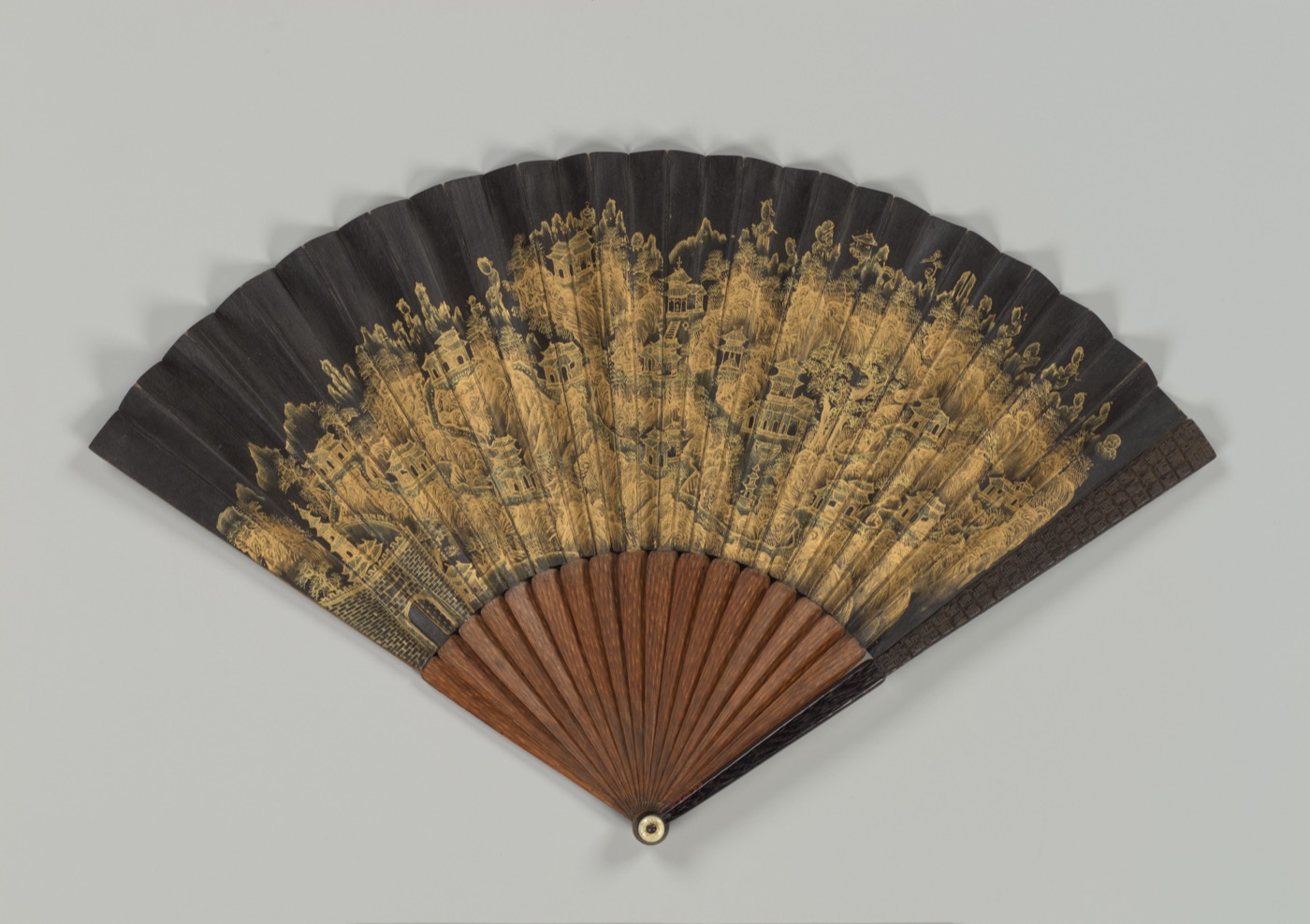
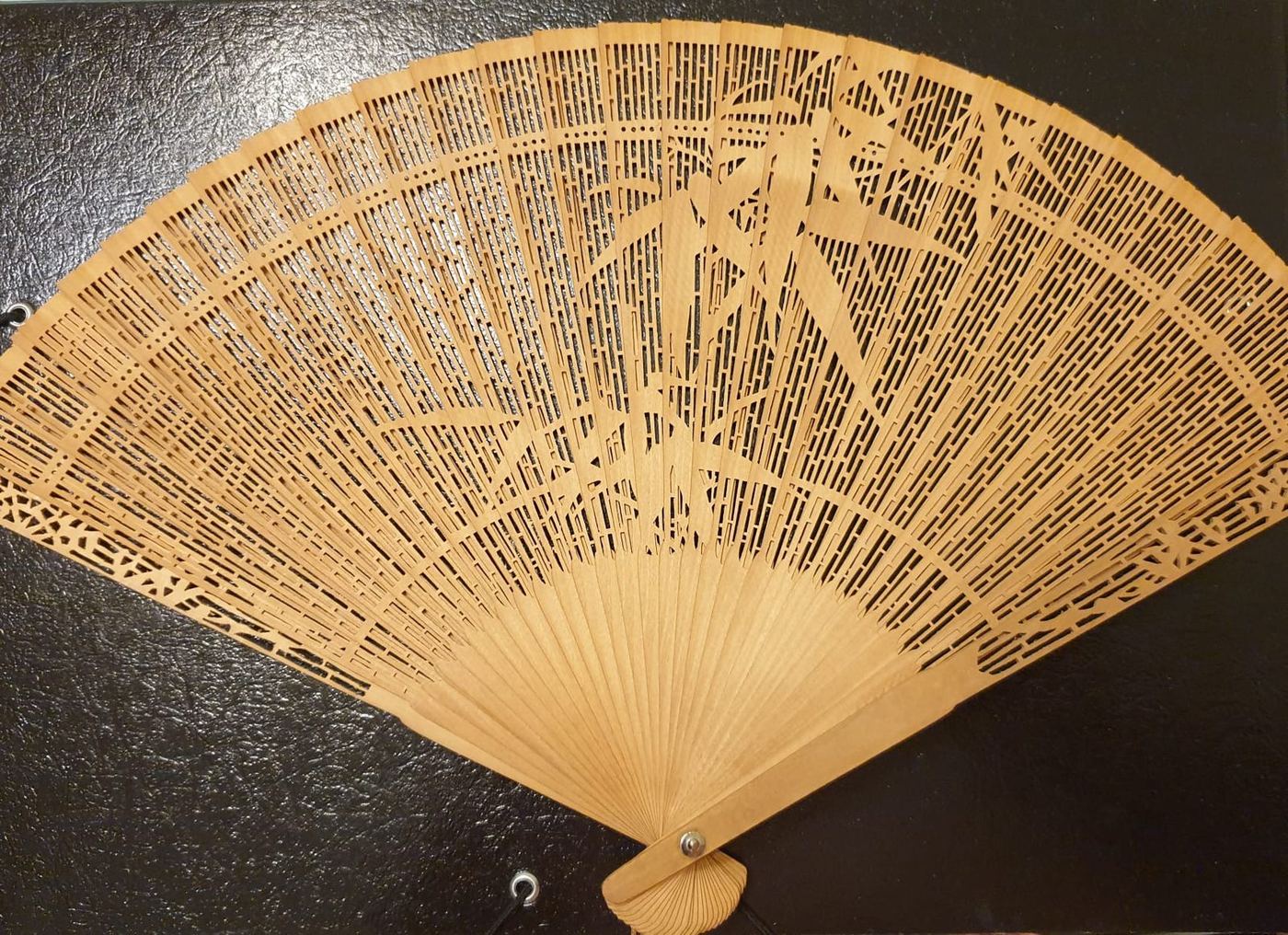
A Chinese sandalwood fan is a fan carved from fragrant tánxiāng (檀香) wood — the heartwood of Santalum trees, and a Suzhou specialty. The scent is in the material, not in a finish, which is what makes these fans behave differently from every other fan you can buy.
In this guide, “Chinese fan” refers to the traditional hand fan (扇子) — not fan culture or the surname Fan.
What this guide covers
The outline
01What makes a fan sandalwood
02A Suzhou craft
03How sandalwood fans are made
04Scent & aging
05Sandalwood vs bamboo vs ivory
06Buying checklist
07Frequently asked questions
Section 01
What makes a fan sandalwood
Sandalwood means one thing: the fragrant heartwood of trees in the genus Santalum — in Chinese, tánxiāng (檀香). The trade has always leaned on East Indian sandalwood (Santalum album), a slow-growing tree whose scent sits inside the wood rather than on it. A sandalwood fan is that material cut, carved and pierced into a fan.
The word gets used loosely, and three different woods get mixed up under it. Sandalwood (檀香, Santalum) is dense and fine-grained, warm brown to gold, and smells of its own oils. Agarwood (沉香, chénxiāng) is a dark, resinous wood from Aquilaria trees; it is also an incense material, and it forms only when the tree has been damaged. Rosewood and zitan (紫檀) are dense dark woods used for furniture and boxes — heavy and handsome, but not fragrant. A listing that cannot say which of the three you are looking at has not told you much.
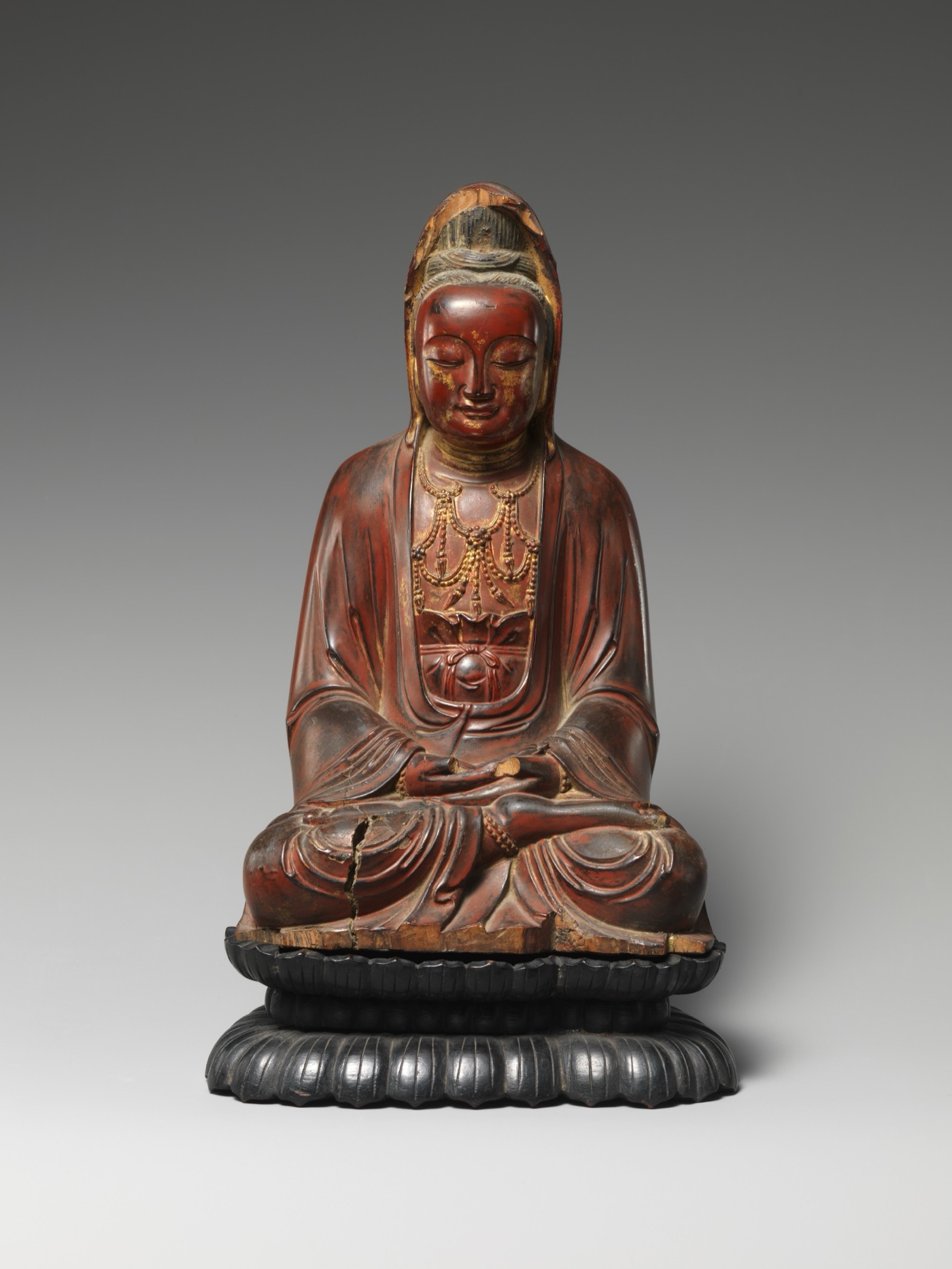
Sandalwood takes fine detail and holds it — the reason it suited carved fan ribs. Chinese carved sandalwood figure, 1624. Image: The Metropolitan Museum of Art (CC0)
Sandalwood also behaves the way fan-making wants it to. It is dense and even-grained, so it holds a cut edge without splintering; it polishes to a soft sheen rather than a shine; and it gives a fan real weight in the hand. Where a bamboo fan is built to be used hard, a sandalwood fan is built to be kept.
Section 02
A Suzhou craft
Suzhou, in Jiangsu, is the city attached to the sandalwood fan. With Hangzhou it was one of the two great centres of Chinese fan-making, and by the Qing dynasty its workshops had split the trade into separate hands — rib carvers, leaf painters, assemblers — each with its own reputation. The carved sandalwood fan (檀香扇, tánxiāng shàn) became Suzhou's signature piece, and it is still the fan people mean when they name the city.
Suzhou's workshops served two markets at once. Fans went to scholars and officials as gifts, and carved Chinese fans went abroad on the export trade; sandalwood examples dated to the eighteenth and nineteenth centuries now sit in museum collections in Europe. Within the workshop's output, the sandalwood fan was always the luxury end, alongside ivory and rare woods.
The craft survives, but the economics are unforgiving. Sandalwood grows slowly and costs accordingly, and a finely pierced leaf can take days of carving. That difference in labour is what separates the two price worlds described in Chinese folding fan price.
Section 03
How sandalwood fans are made
A sandalwood fan is carved in stages, and the order matters as much as the tools.
Choosing the wood — heartwood only, evenly toned and free of cracks. Slow-grown timber gives the densest grain and the most scent.
Cutting — the wood is sawn into thin, even slats. On the all-wood fans Suzhou is known for, the leaf itself is made from sandalwood strips, so there is no paper to yellow and no silk to stain.
Shaping — the ribs and the two outer guard sticks are tapered, rounded and smoothed by hand so the fan lies flat when it is closed.
Piercing (拉花, lāhuā) — the openwork. A fine saw and knife cut right through the wood, leaving lattices, flowers and figures joined by slender bridges. It is the stage where one slip ruins the leaf.
Scorching (烫花, tànghuā) — on some fans the decoration is burned into the surface with a heated tool instead of painted. The shading comes out in tones of brown and cannot rub off.
Assembly — the ribs are drilled and pinned at the rivet, and on pierced fans the sticks are also threaded together with silk cord so they cannot spread.
Machine work is part of this market too, and it is not dishonest — it is simply cheaper. The difference shows at the edge of every opening. Hand-pierced work has crisp walls and slight variation; a machine leaves fretwork that is identical to the millimetre and often ringed with a scorched halo. Hold the fan up to the light and you can see which one you have. The hand side of that calculation is the same one described in handmade Chinese folding fans: what you are paying for is hours.
The leaf is where sandalwood fans part company with the rest of the craft. A silk fan lives or dies by its surface; a sandalwood fan has no soft surface to protect, because every part of it is the material itself. Damage to a carved fan is therefore almost always structural — a broken bridge in the piercing, a split rib, a loose rivet.
Section 04
Scent & aging
The scent is why people buy sandalwood, and often why they are disappointed by it. The fragrance comes from oils inside the wood, so it is strongest when the fan is new — freshly cut, freshly pierced, freshly polished. Those surface oils are also the first thing to go.
In the hand the smell reads dry and warm rather than perfumed: closer to incense, pencil shavings and an old bookshelf than to a scented candle. Open the fan and it is noticeable; leave it closed in a drawer for a month and it drops to almost nothing. That is normal behaviour for the material, not a sign that you were sold the wrong thing.
Keep it closed in a box. Wood that is not sitting in moving air holds its scent longer.
Keep it away from perfume, scented drawers, air fresheners and plastic bags — sandalwood absorbs whatever it lives near, including the wrong things.
Keep it out of direct sun and dry heat. Sandalwood cracks and warps like any wood, and strong light fades the surface.
Keep water away from it. A dry cloth is the right tool; a wet fan is a cracked fan.
If the scent fades, store the fan with a few sandalwood shavings, or rub the wood lightly with a dry cloth to open the surface. Do not treat it with furniture polish or fragrance.
How long the scent lasts has no single honest answer. It depends on how the wood was cut and kept, how dry your climate is, and how often the fan sees air. A fan that is looked after keeps some of it for years. A seller who promises it will never fade is selling you something other than sandalwood. The wider routine, including what to do when a fan is damaged, is in how to care for a Chinese folding fan.
Section 05
Sandalwood vs bamboo vs ivory
Material
In the hand
Best for
Watch out for
Bamboo
Light and springy
Daily use, a first fan, painting
Cracks in dry heat, and feels disposable
Sandalwood
Dense, warm, faintly scented
Gifts, display, carved work, collecting
Often substituted; the price of the material
Rosewood and zitan (紫檀)
Very heavy, dark, glass-smooth
Furniture, boxes, heavy carved objects
Not fragrant, and confused with sandalwood by colour
Ivory (antique only)
Pale, smooth, cool
Museum pieces and antique collections
New ivory is banned in most markets
Choosing a fan material
The choice is simpler than the table looks. If you want a fan to use all summer, buy bamboo: it is cheap, it springs back, and nothing about it is precious enough to make you nervous about opening it. If you want a fan to give, display or collect, sandalwood is the one that carries weight — it looks like carving, it smells like something, and it will not end up forgotten at the back of a drawer. Ivory, once at the top of this ladder, is now at the bottom for anyone buying new.
The other end of the market: a light folding fan on bamboo ribs. Photo: Yanwenjin via Wikimedia Commons (CC BY-SA 4.0)
Shape matters as much as material. Sandalwood is mostly sold as folding fans, but the round fan and the feather fan are their own traditions with their own materials — the overview is in types of Chinese fans.
Section 06
Buying checklist
Sandalwood is expensive enough that the market is full of near-misses. Six checks before you pay:
Weight. A sandalwood fan should feel heavy for its size — noticeably heavier than a bamboo fan of the same dimensions.
Where the smell comes from. Sandalwood smells at its cut edges and pierced openings, not from every surface. A fan that is scented all over, like a perfume counter, has been treated.
The grain. Look for fine, even, warm brown grain. A coat of paint or a dark stain across the whole surface is usually there to hide a cheaper wood.
The piercing, held to the light. Crisp, slightly varied openwork is hand-cut. Fretwork that is identical everywhere, with scorched edges, is machine-cut.
The names. Ask which species and where the fan was made. “Sandalwood” on its own tells you nothing; you want 檀香, Santalum album, or the name of a workshop.
Build, not just carving. The fan should open to an even arc, the ribs should sit together when closed, and the rivet should be tight. A beautiful leaf on a sloppy frame will not last.
The check most buyers skip comes before the shop: decide what the fan is for. A fan that lives in a box can afford to be delicate and finely pierced; one that travels should be simpler and tougher. The same logic — materials, construction, provenance — is set out for folding fans in authentic Chinese folding fans, and if the fan is a gift, Chinese fan gifts matches material to occasion.
Section 07
Frequently asked questions
What is a Chinese sandalwood fan?
A Chinese sandalwood fan (檀香扇, tánxiāng shàn) is a hand fan carved from the fragrant heartwood of Santalum trees, usually East Indian sandalwood (Santalum album). The best-known type is Suzhou work: fine ribs, a carved and pierced fan body, and often a silk cord running through the sticks. Some sandalwood fans instead pair carved sandalwood ribs with a paper or silk leaf.
Why do sandalwood fans smell?
The fragrance is in the wood. Sandalwood heartwood carries its own oils, so the scent comes from the material rather than from a coating or a perfume. It is strongest when the wood has just been cut, pierced or polished, and it fades slowly as those surface oils evaporate — which is normal, not a fault.
Are sandalwood fans handmade?
Some are, and those are the ones worth paying for. Hand-pierced fans show crisp, slightly varied openwork; machine-cut and laser-cut fans are uniform and often carry scorch marks along the edges. Both are sold as sandalwood fans, so the carving is what tells you which one you are holding.
How do you care for a sandalwood fan?
Keep it closed in a box, away from sunlight, dry heat and damp, and away from perfume and scented drawers — sandalwood absorbs whatever it sits near. Wipe it with a dry cloth rather than a damp one, and do not treat it with furniture polish or fragrance. The full routine for folding fans, including the problems that need a conservator, is in how to care for a Chinese folding fan.
How much does a sandalwood fan cost?
There are two separate markets. A souvenir-grade fan with machine-cut sandalwood ribs can cost tens of dollars, while a hand-carved Suzhou fan with a pierced leaf starts around $100 and rises with the fineness of the carving. Antique sandalwood fans are priced on condition and provenance. Chinese folding fan price sets out the bands by material.