A folding fan takes most of its damage in the hand, not on the shelf. How you open it, where you store it and what you reach for when it needs cleaning decide whether the leaf stays intact — here is what to do, and what to leave to a conservator.
In this guide, “Chinese fan” refers to the traditional hand fan (扇子) — not fan culture or the surname Fan.
What this guide covers
The outline
01Open & close habits
02Handling paper vs silk leaves
03Cleaning
04Storage
05Minor repairs
06When to call a professional
07Frequently asked questions
Section 01
Open & close habits
A folding fan is a mechanism before it is a painting. Every time it opens and closes, the leaf flexes along the same folds and the ribs pivot around one small rivet. That is where wear begins, and it is why the way you handle a fan matters more than how often you look at it.
Open the fan slowly by holding the two outer guard sticks close to the rivet and drawing them apart, letting the leaf unfold as the ribs spread. Do not flick it open the way a performer does; that snap is a stage gesture with a short life. If the fan resists, stop — you have reached the angle it was built for, or something inside is misaligned. The same care applies when closing: guide the ribs back into line instead of forcing the leaf flat.
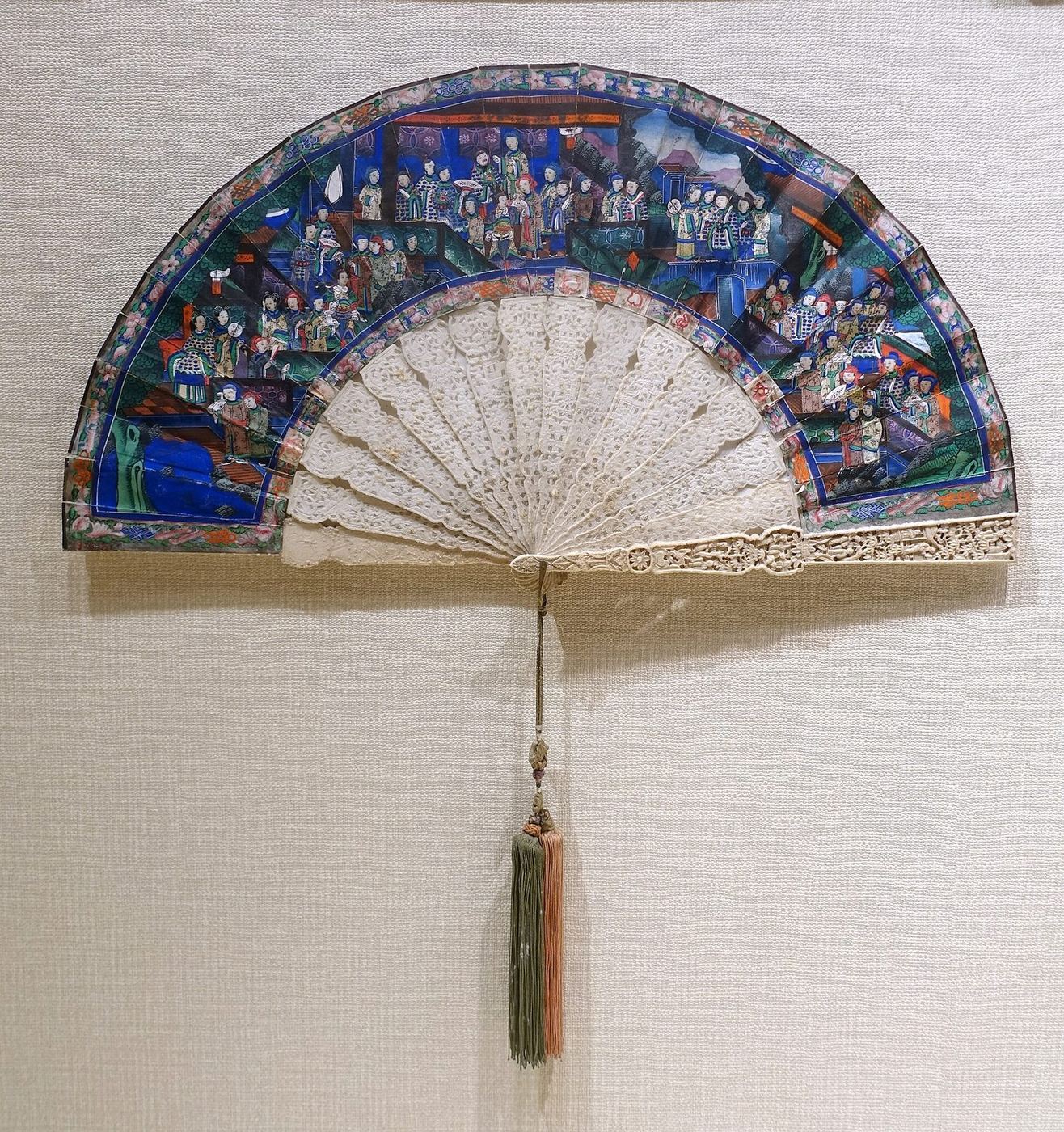
Ribs, leaf and guard sticks — the parts that take the stress of every opening.
A few everyday habits go a long way. Keep the fan out of the sun when it is open. Do not leave it half-open on a table where it can be knocked. Never rest anything on top of it. If you want the movement basics — how to open, close and hold a fan properly — they are covered in how to use a Chinese fan and how to hold a Chinese fan.
Section 02
Handling paper vs silk leaves
Paper and silk fail in different ways, so they need slightly different handling. A paper fan is stiff but unforgiving: it takes a crease and keeps it, and repeated flexing along the folds eventually cracks the fibers. Water and skin oils are the other risks. A drop of rain on a painted paper leaf can lift pigment or leave a ring that never comes out.
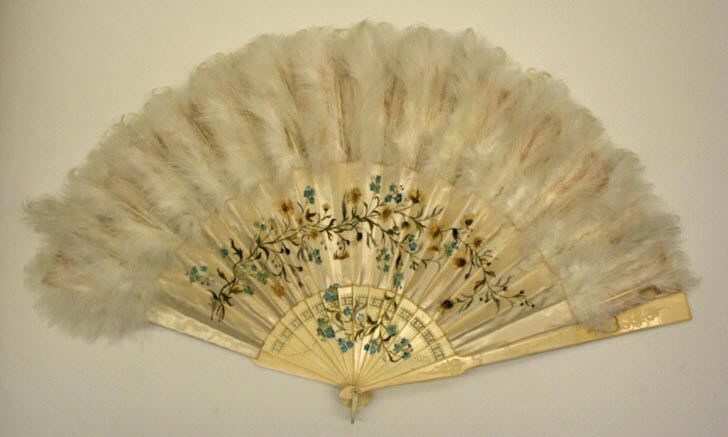
Image: The Metropolitan Museum of Art via Wikimedia Commons (CC0)
A silk fan moves more forgivingly, but the surface is delicate in other ways. Silk snags on rings, rough hands and the edge of a bag; a pulled thread cannot be pushed back. Water leaves tide marks, and dyes fade faster than paper in strong light. Silk also stretches, so an unsupported leaf can distort over time if the fan is displayed hanging open without anything behind it.
For both materials, the safest habit is the same: handle the fan by the ribs and guard sticks, not the painted leaf. Keep your hands clean and free of lotion or perfume. If you want a fan to cool you on a hot day, use a plain, inexpensive one and keep the good fan for display — a fan that is opened and closed hundreds of times will not stay crisp for long.
Section 03
Cleaning
The first rule of fan cleaning is that most fans should only ever be cleaned dry. A soft brush is the right tool for light dust. Support the leaf with one hand and brush gently with the other, working from the center fold out toward the edges so you are lifting dust off the surface rather than pushing it into the folds. A dry microfiber cloth is safe for metal or lacquered ribs, but keep it away from the painted leaf.
Do not use water, damp cloths, alcohol wipes or household cleaners on a painted paper or silk leaf.
Do not use erasers, and do not scrub a mark. You are more likely to remove the surface than the stain.
Do not use tape, glue or adhesive pads anywhere on the fan. They stain, they age badly, and a conservator has to undo them.
Do not blow dust off with compressed air; it drives particles deeper into the folds.
Two problems need to be handed to a conservator rather than cleaned at home. The first is a sticky or greasy surface, which is usually a buildup of handling residue that cannot be lifted with a dry brush. The second is mould — dark spots, a musty smell or a fuzzy surface. Do not brush or wipe mould, because that spreads spores. Put the fan in a ventilated space away from other objects and get advice before you do anything else.
Section 04
Storage
Light and humidity do the slow damage. Ultraviolet light fades silk, paper and pigments; damp conditions encourage mould and rust at the rivet; very dry air makes paper brittle; and constant swings between the two are worse than either extreme, because the leaf expands and contracts while the ribs do not. A fan stored in a dark drawer in a normal living space will generally fare far better than one displayed in full sun.
Photo: Yanwenjin via Wikimedia Commons (CC BY-SA 4.0)
Where to keep it: an interior closet or drawer, away from radiators, air vents, windows and damp exterior walls. Attics and basements are the two worst rooms in most houses. The box matters too. Choose one long enough that the fan does not press against the ends, line it with acid-free tissue, and add a soft support under the leaf so it cannot slide. Museums often store folding fans open on padded mounts, because the folds take the most stress; at home, storing the fan closed in a box that stops it moving is a reasonable compromise.
Avoid plastic bags and sealed containers. If there is any moisture in the fan, they trap it.
Never bundle a fan with rubber bands, string or clips; they leave permanent marks.
Do not stack books or boxes on top of it.
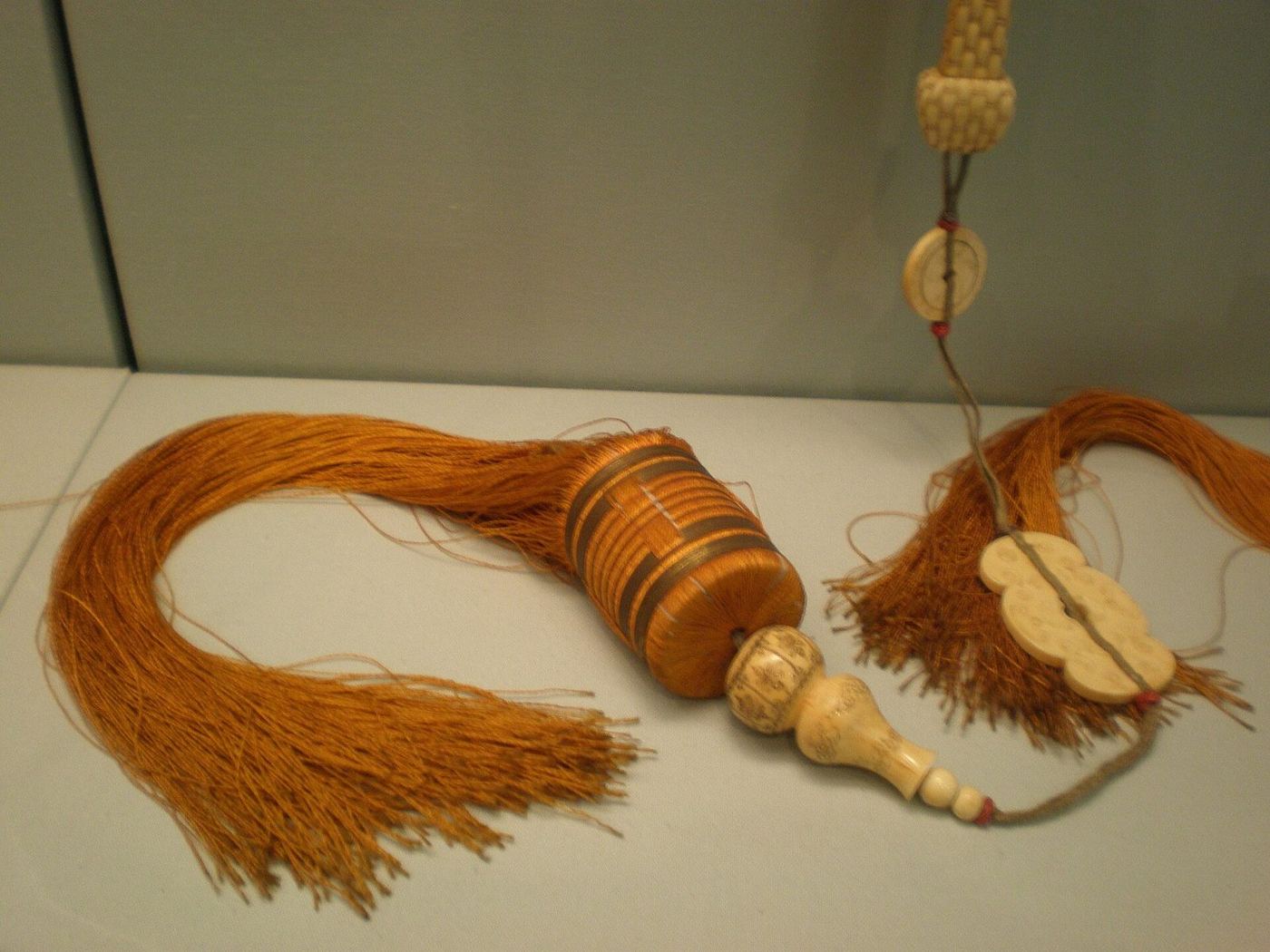
Do not hang a fan by its tassel for months at a time; the weight pulls on the rivet end.
Photo: Daderot via Wikimedia Commons (public domain)
If you want to display the fan open, give the leaf real support rather than trusting the ribs to hold it. Use a mount that cradles the leaf from behind, keep it out of direct sun, and consider UV-filtering glazing if it goes in a frame. Rotate what is on display and let the fan rest in its box for part of the year. A fan that is displayed open under tension for years will eventually remember that shape.
Section 05
Minor repairs
Some small jobs are safe to do yourself. A tassel that has come loose can be re-tied if the cord is intact. Dust and surface grime can be brushed away. Folds that have shifted slightly can be eased back into line with the fan closed.
Almost everything else should stop at the point of damage. Tape, household glue and superglue are the enemy of a repairable fan: they stain paper, stiffen silk and turn a small tear into a permanent problem that a conservator must spend hours reversing. If a piece comes loose, keep it with the fan in a labeled acid-free envelope instead of trying to reattach it.
Photo: BrokenSphere via Wikimedia Commons (CC BY-SA 3.0)
Problem
What to do
What not to do
Leaf starting to separate from a rib
Close the fan, keep it flat, store it as it is and get advice
Do not glue it back down yourself
Rivet loose, or ribs sitting out of line
Handle as little as possible and take it to a conservator
Do not hammer, squeeze or tighten the rivet
Small tear in paper or silk
Support it with acid-free tissue and keep it in a rigid box
Do not tape, stitch or iron it
Wrinkled or cockled leaf
Store it flat and ask about humidification and flattening
Do not press it under books or iron it
Tassel detached, cord intact
Re-tie it, or store the tassel with the fan
Do not cut or shorten the original cord
What to do when something goes wrong
Section 06
When to call a professional
A cheap printed souvenir fan is usually not worth professional treatment; if it is damaged, replacing it makes more sense. The calculation changes with age, materials and painting. Anything with hand-painted work, gold, ivory, tortoiseshell or carved sandalwood ribs deserves a conservator's opinion before you touch it.
Active mould or any sign of insects, including tiny holes, frass or a musty smell.
Tears, losses or flaking paint anywhere on the leaf.
Structural problems at the rivet, or ribs that no longer sit together.
An old repair with tape or glue that has gone yellow or brittle.
An antique or a fan you plan to sell, where treatment and documentation affect value.
Look for a conservator who specializes in paper or textiles; national conservation bodies in many countries keep searchable registers of accredited professionals. Send clear photographs and measurements before you ship anything, ask for a treatment proposal and a cost estimate, and be ready for the answer to be “do as little as possible.” Prevention is genuinely cheaper than treatment. If you are still choosing a fan to buy, the same logic favors a well-made one: the construction of a handmade Chinese folding fan is easier to keep in good condition than a fragile novelty, and the buyer's checklist in authentic Chinese folding fans covers what to look at before you pay.
When you pack a fan for a conservator or for storage, use a rigid box rather than an envelope, pad the ends so the fan cannot slide, and label the box so nobody stacks anything on it. A fan that travels well arrives repairable.
Section 07
Frequently asked questions
How do you store a Chinese folding fan?
Keep it in a dark, dry drawer or closet away from sunlight, radiators and damp walls. Use a box long enough that the fan does not touch the ends, line it with acid-free tissue, and avoid plastic bags or sealed containers that trap moisture. Museums often store fans open on padded supports because the folds take the most stress; at home, a closed fan in a snug, padded box is a practical compromise.
Can you clean a paper folding fan?
Light dust can be brushed off with a soft brush while you support the leaf. Beyond that, paper fans should be cleaned dry — no water, damp cloths, alcohol wipes or household cleaners, which can lift paint and leave stains. Sticky residue, mould and embedded dirt need a paper conservator, not a home remedy.
How long does a Chinese folding fan last?
There is no fixed lifespan. It depends on the materials, how often the fan is opened and closed, the light and humidity where it is kept, and how it is handled. A printed souvenir kept in a box may stay presentable for decades, while a painted fan left in sunlight and handled daily can deteriorate much faster.
Why did my fan's paper wrinkle?
Wrinkling usually comes from moisture and changing humidity. Paper absorbs water from damp air and expands, then contracts as it dries, while the ribs stay the same size. Damp storage, a spill, a steamy room or pressing the fan flat can all cause it. Do not iron it or put it under heavy books; a conservator can sometimes relax and flatten the leaf safely.
Can a folding fan be repaired?
Many fans can be repaired, but the right repairs are done by a conservator. Tears, losses, flaking paint and structural problems at the rivet are treatable, while a loose tassel can often be re-tied at home. Tape and household glue make professional repair harder, so avoid them even on small damage.
Can I use a Chinese folding fan every day?
You can, but a fan that is opened and closed daily will wear out faster than one that is displayed or stored. For everyday cooling, many collectors use a simple, inexpensive fan and keep a painted or antique one for occasional use. If you do carry a good fan, hold it by the ribs, keep it out of the sun and give it a proper box when you get home.