The Chinese fan began as feathers, leaves and ritual — and grew into a portable work of art. From early ceremonial fans to the folding fans tucked into the sleeves of Ming scholars, here is the full history.
In this guide, “Chinese fan” refers to the traditional hand fan (扇子) — not fan culture or the surname Fan.
What this guide covers
The outline
01The earliest fans: feathers, leaves and ritual
02Han to Tang: round fans and palace culture
03The folding fan arrives
04Ming and Qing: the scholar's companion
05Fans in modern China and the diaspora
06Timeline of key moments
07Frequently asked questions
Section 01
The earliest fans: feathers, leaves and ritual
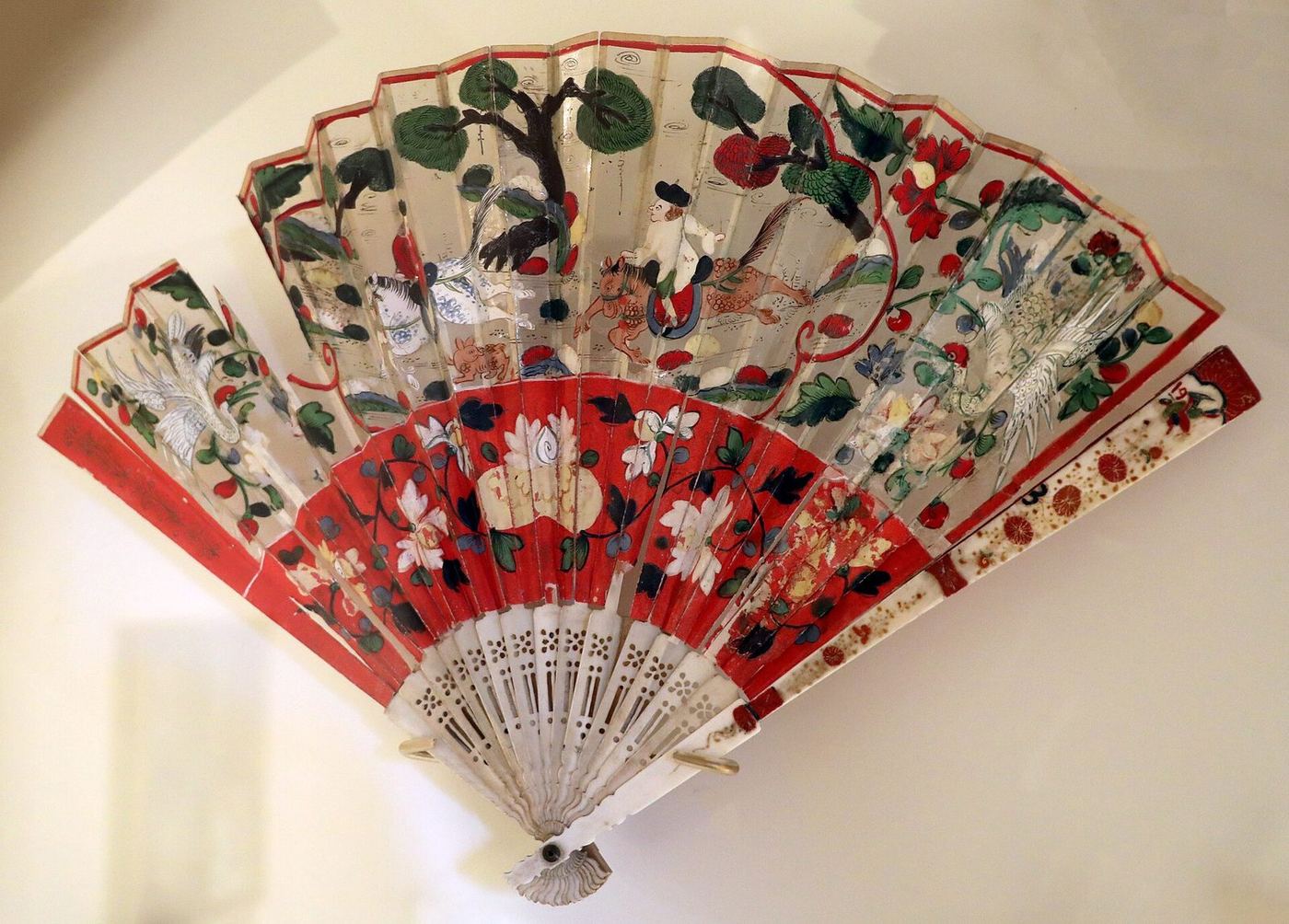
Fans reach back to the very beginning of Chinese civilization. The earliest were made from feathers, leaves and woven reeds — materials that came free from nature — and they were used for two things at once: cooling the face and marking rank. The Chinese character for fan, 扇, is built from 户 (hù, “door”) and 羽 (yǔ, “feather”), preserving the memory of a feather fan at a doorway.
Photo: Francesco Bini via Wikimedia Commons (CC BY-SA 4.0)
Court attendants carried large long-handled fans — the ceremonial zhǎngshàn (掌扇) — beside emperors and ritual processions, where they shaded the ruler and announced his status before he was even visible. Feather fans served the same double purpose: the Chinese feather fan cooled its owner and, in portraits and opera, told the audience they were looking at a strategist or an immortal.
Section 02
Han to Tang: round fans and palace culture
From the Han dynasty through the Tang, the fan of the court was round. The tuánshàn (团扇) — a circular frame covered in silk or gauze, mounted on a handle — became the standard prop of palace women, who appear in painting after painting holding a round fan at their shoulder.
The round fan also entered literature early. The Han court lady Ban Jieyu wrote a poem comparing herself to a white silk fan: loved in summer, folded and put away when autumn comes. More than a thousand years later, poets still used the discarded fan as an image of a neglected wife. By the Tang dynasty, fans were common enough to appear in everyday poetry — and the round fan was their default shape.
Section 03
The folding fan arrives
The folding fan — the zhéshàn (折扇), “the fan that folds” — reached China later, and historians still debate the exact route. Court records show folding fans arriving with tribute and trade missions from Japan and Korea during the Song dynasty, when the collapsible pleated fan was already a familiar object in those courts. Chinese workshops quickly took the idea and made it their own.
What matters for the history is not the first sighting but the adoption. By the end of the Song and the start of the Ming, the folding fan had stopped being an imported curiosity and started being a Chinese classic. Its full story is told separately in the history of the Chinese folding fan.
Section 04
Ming and Qing: the scholar's companion
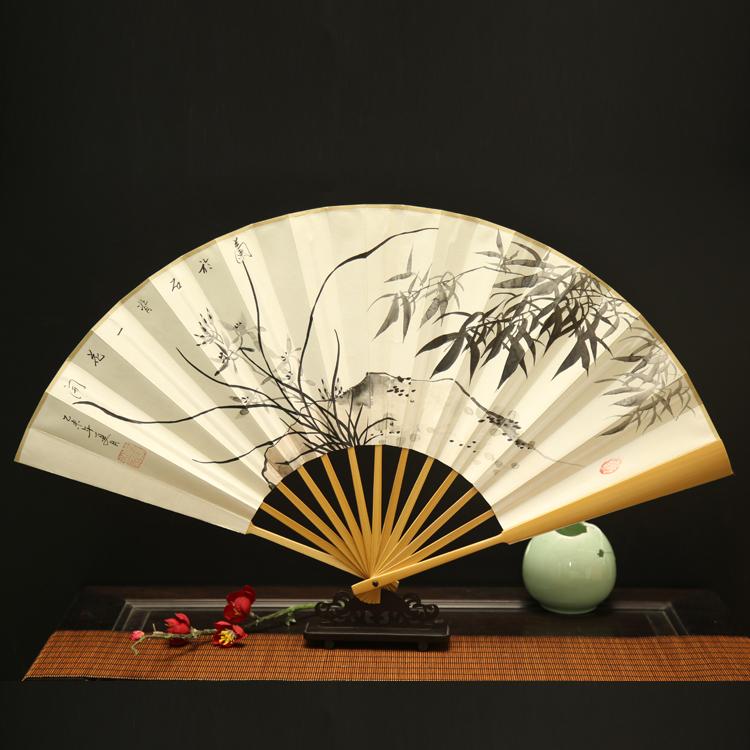
The Ming dynasty made the folding fan the signature object of the scholar class. A closed fan slid into the sleeve — earning the name 怀袖雅物 (huáixiù yǎwù), “a refined object for the sleeve” — and an open one displayed a tiny painting or poem. Artists such as Shen Zhou and Tang Yin painted on fan leaves as naturally as on scrolls, and Chinese fan art flourished.
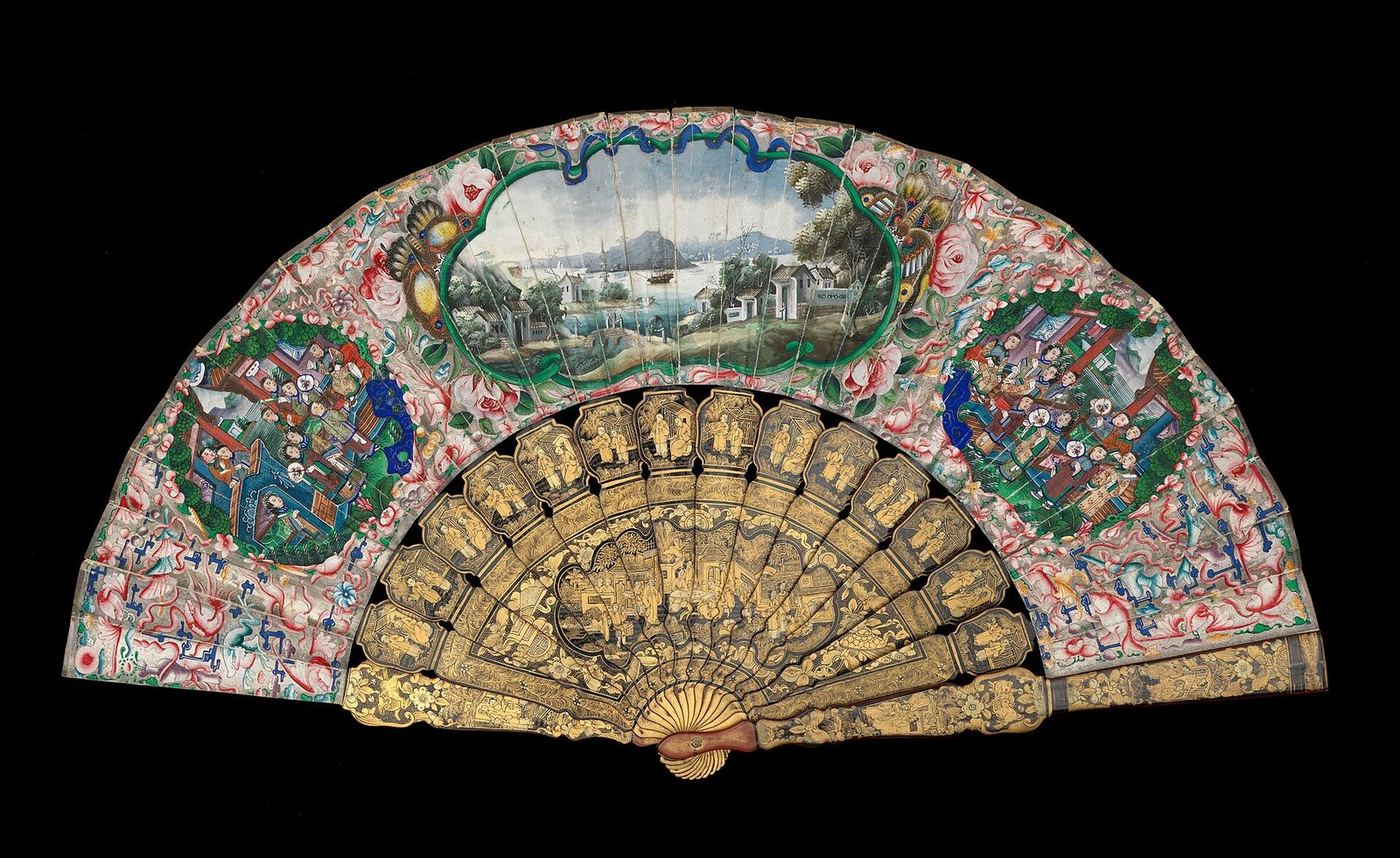
Image: Chester Beatty Library via Wikimedia Commons (public domain)
The Qing dynasty added luxury and commerce. Workshops in Suzhou carved sandalwood and ivory ribs, while Canton produced painted export fans that travelled to Europe by the shipload. Court life in the Qing is covered in Chinese fans in the Qing dynasty, and the peak of literati culture in Chinese fans in the Ming dynasty.
Section 05
Fans in modern China and the diaspora
Electric fans and air conditioning removed the fan's everyday job, but they did not remove the fan. Today the Chinese hand fan survives in tai chi and fan dance, in opera and ceremony, in wedding gifts and museum collections, and in the revival of traditional crafts in Suzhou and Hangzhou.
For the Chinese diaspora, the fan also became a carrier of identity — a tangible piece of Chinese culture that can hang on a wall, appear in a dance performance, or pass between generations as a gift. That living side of the tradition is covered in Chinese fan traditions.
Section 06
Timeline of key moments
Era
What changed
Shang–Han
Feather and palm-leaf fans in daily use; long-handled ceremonial fans at court
Han–Tang
Round silk fans (tuánshàn) dominate court culture; Ban Jieyu's poem on the discarded fan
Song
Folding fans arrive with tribute and trade from Japan and Korea
Ming
The folding fan becomes the scholar's companion; painting and calligraphy on fans peak
Qing
Sandalwood, ivory and export fans carry Chinese fans around the world
Today
The fan lives on in dance, opera, tai chi, gifts and the craft revival
A short timeline of the Chinese fan
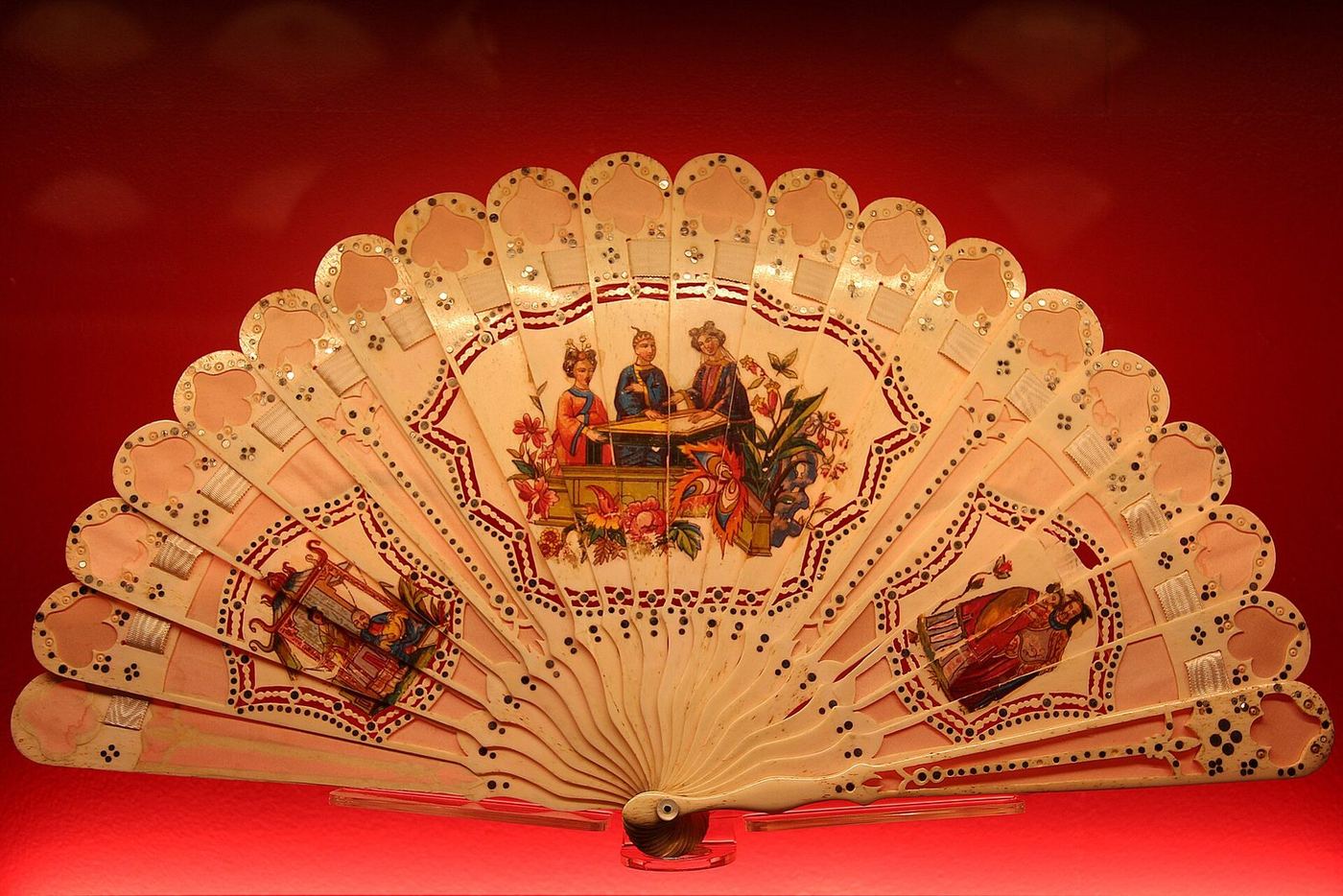
For the modern collector, the same arc explains why a bamboo-and-paper folding fan, a silk round fan and a carved sandalwood fan can look so different — each one is a different century of the same tradition. The types of Chinese fans page is a good next stop.
Photo: Jean-Pol GRANDMONT via Wikimedia Commons (CC BY 4.0)
Section 07
Frequently asked questions
When did Chinese fans first appear?
Fans made of feathers, leaves and reeds appear in the earliest records of Chinese civilization, and long-handled ceremonial fans are attested from the earliest dynasties. The round silk fan dominated the Han and Tang courts, while the folding fan became popular from the Song dynasty and peaked in the Ming.
When did the folding fan become popular in China?
Folding fans reached China during the Song dynasty through tribute and trade from Japan and Korea. They became the signature fan of the scholar class in the Ming dynasty and reached their peak of craft and luxury in the Qing.
Why did Chinese scholars carry fans?
A scholar's folding fan was practical — it folded into the sleeve — but it was also a portable work of art and a signal of education and taste. Scholars painted and wrote on fan leaves, exchanged them as gifts, and used them the way a modern professional might use a well-chosen accessory.
Are Chinese fans still made today?
Yes. Traditional workshops in Suzhou, Hangzhou and elsewhere still make handcrafted fans, and the craft is experiencing a revival alongside fan dance, tai chi and opera. See handmade Chinese folding fans.