Types

Chinese Feather Fans

A Chinese feather fan (yǔshàn) is one of the oldest fans in the world — from the goose-feather fan of Zhuge Liang to the great ceremonial fans of the court. Explore its history, craft and meaning.

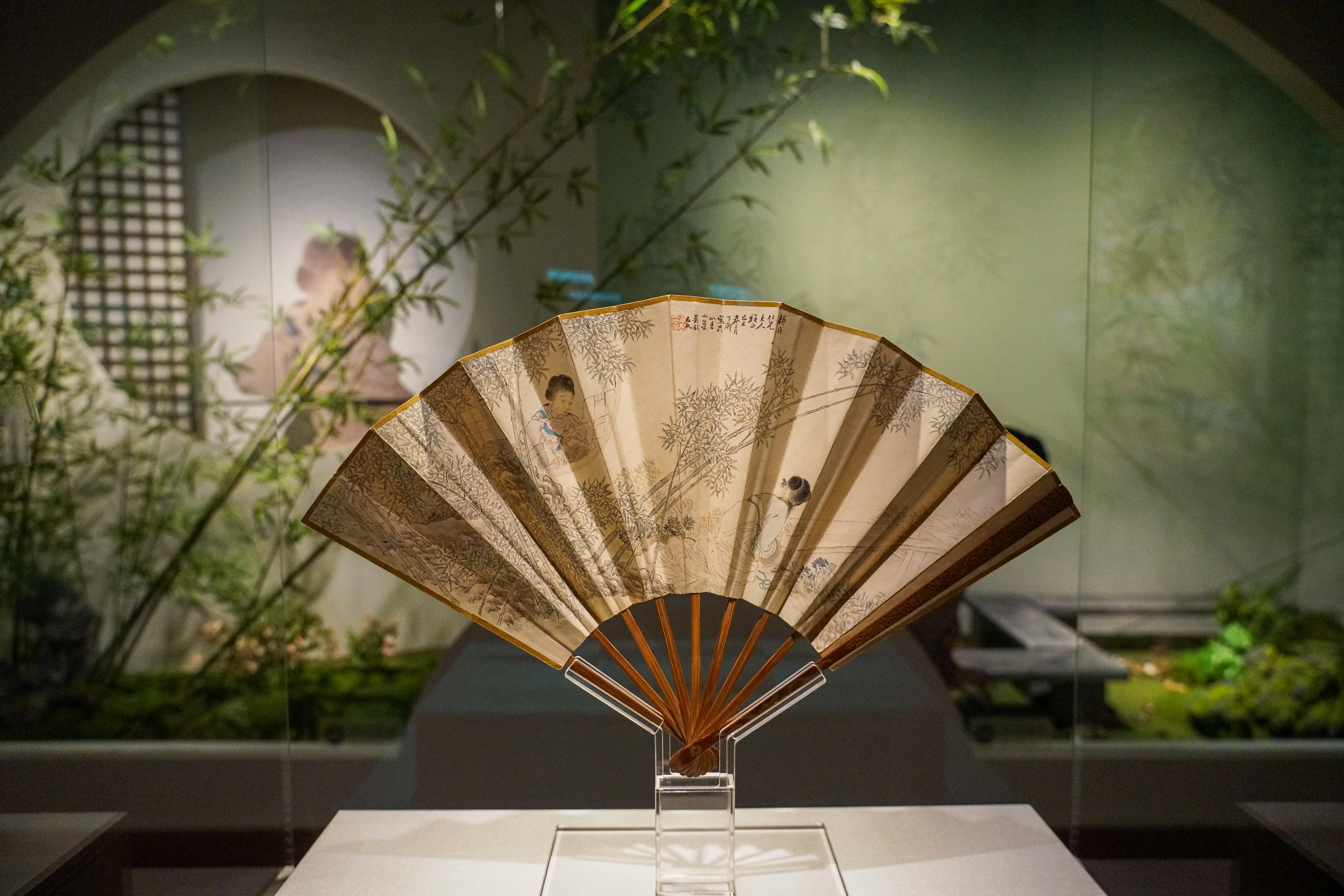
Traditional Chinese folding fan with hand-painted flowers, fully open

In this guide, “Chinese fan” refers to the traditional hand fan (扇子) — not fan culture or the surname Fan.

What this guide covers

The outline

  1. 01The feather fan in early China
  2. 02Zhuge Liang and the strategist's fan
  3. 03Ceremonial fans at court
  4. 04Feathers, handles and craftsmanship
  5. 05The feather fan today
  6. 06Frequently asked questions

Section 01

The feather fan in early China

The Chinese feather fan — yǔshàn (羽扇) — is one of the oldest forms of the Chinese fan. Feathers were the natural material before bamboo, paper and silk: light, available and striking, they gave the earliest fans both their cooling power and their presence.

The Chinese character for fan, 扇, is itself built from 户 (door) and 羽 (feather) — a memory of the feather fan at the doorway. Feather fans appear in early court scenes and ritual contexts, and they remained in use long after folding fans appeared, especially where authority or ceremony mattered. See the history of Chinese fans for the full arc.

Section 02

Zhuge Liang and the strategist's fan

The feather fan is inseparable from Zhuge Liang, the strategist of the Three Kingdoms period. In literature, opera and countless portraits, he appears with a goose-feather fan (鹅毛扇, é máo shàn) in hand, calmly planning campaigns while others panic. The fan became shorthand for wisdom, composure and strategy.

Because of Zhuge Liang, the feather fan reads in Chinese culture as a thinker's object, not a lady's or a laborer's. It is why the feather fan appears on opera stages whenever a strategist walks on — the fan tells the audience who the character is before a word is spoken.

Section 03

Ceremonial fans at court

Beyond the hand-held feather fan, Chinese courts used enormous feather fans on long handles — the ceremonial zhǎngshàn (掌扇) — carried in pairs beside the emperor or in ritual processions. Made from pheasant, crane or peacock feathers, they announced rank before the ruler was visible and shaded him as he moved.

These ceremonial fans connect the feather fan to the ritual side of Chinese culture. Court processions, ancestral rites and temple ceremonies all kept feather fans in service long after everyday fans had switched to bamboo and paper — a tradition explored in Chinese fan traditions.

Section 04

Feathers, handles and craftsmanship

PartMaterialsNotes
FeathersGoose, crane, pheasant, peacockChosen for length, color and symmetry
BindingThread, silk cordFeathers are bound in a fan-shaped spread
HandleBamboo, wood, ivory (antique)Long enough to hold and wave
FinishTassels, carved capsDecorative additions for ceremony and display
Materials of the feather fan

Making a feather fan is a different craft from folding-fan making: the feathers must be selected for symmetry, bound so they fan evenly, and mounted so they do not shed. Modern makers also use ethically sourced feathers, which matters when choosing a feather fan today — the same care goes into every handmade fan.

Section 05

The feather fan today

  • Opera and performance — the strategist's prop, still doing its job on stage.
  • Ceremony — feather fans appear in processions and ritual revivals.
  • Decoration — mounted fans and wall pieces in cultural interiors.
  • Dance and costume — feather fans feature in performances and cosplay.
  • Collecting — antique ceremonial fans are museum and collector pieces.

As an everyday cooling fan, the feather fan has been replaced by paper and bamboo — but as an image, it has never left. The goose-feather fan still means wisdom, and the ceremonial fan still means majesty. If you want to know where fans live on in modern China, why do Chinese people use fans is the place to start.

Section 06

Frequently asked questions

What is a Chinese feather fan?

A Chinese feather fan (yǔshàn, 羽扇) is a fan made of feathers — goose, crane, pheasant or peacock — bound into a fan shape and mounted on a handle. It is one of the oldest forms of the Chinese fan and is associated with strategy, ceremony and authority.

Why is Zhuge Liang shown with a feather fan?

Zhuge Liang, the Three Kingdoms strategist, is traditionally shown calmly holding a goose-feather fan (鹅毛扇). The fan became shorthand for wisdom and composure, and opera still uses it to identify a strategist on stage.

What were ceremonial feather fans used for?

Large feather fans on long handles (zhǎngshàn) were carried beside emperors and in ritual processions to mark rank and provide shade. They remained in ceremonial use long after everyday fans moved to bamboo and paper.

Are feather fans still used today?

Yes — in opera, ceremony, performance, dance and decoration. Modern makers use ethically sourced feathers, and antique ceremonial feather fans are collected and exhibited.