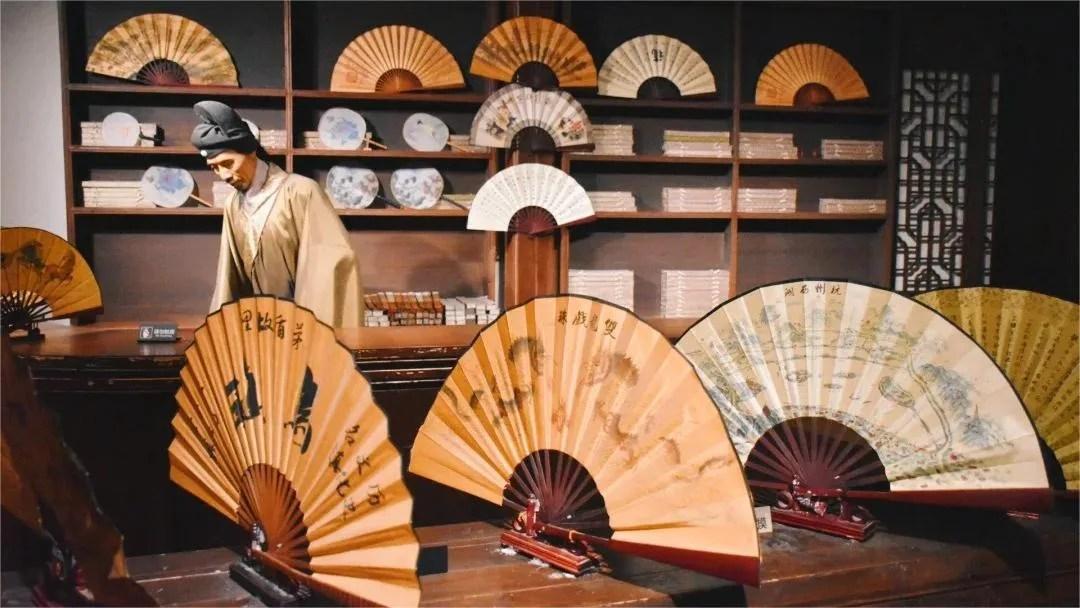
What goes into a handmade Chinese folding fan — bamboo, silk, paint and hours of craft — and how to tell genuine handwork from machine work.
In this guide, “Chinese fan” refers to the traditional hand fan (扇子) — not fan culture or the surname Fan.
What this guide covers
The outline
01The craftspeople behind the fans
02Bamboo and sandalwood ribs by hand
03Hand-painting vs printing
04The assembly process
05How long a handmade fan takes
06What handmade costs
07Frequently asked questions
Section 01
The craftspeople behind the fans
A handmade Chinese folding fan begins with a person, not a machine. In the fan workshops of Suzhou and Hangzhou, the craft is divided among specialists — rib carvers, leaf painters, mounters — and each skill takes years to learn. The people who make these fans are the reason the tradition survived; buying their work keeps them making it.
This guide is about recognizing and choosing genuine handwork. For the authentication rules that apply to every fan, start with authentic Chinese folding fans; here we look at the craft itself.
Section 02
Bamboo and sandalwood ribs by hand
Handmade ribs start as a bamboo stalk or a block of sandalwood. The maker splits bamboo along the grain, then sands and shapes each rib individually — tapering the ends, rounding the edges, and thinning the slats until they flex without cracking. Sandalwood ribs are carved rather than split, often with pierced or engraved patterns that are the hallmark of Suzhou's sandalwood fan tradition.
The tell of handwork is imperfection: hand-shaped ribs are very slightly uneven, and the grain varies from rib to rib. Machine-made ribs are identical, which sounds better but is exactly the opposite of what you want in a craft object. Rib materials and their trade-offs are compared in Chinese bamboo fans.
Section 03
Hand-painting vs printing
The leaf is where a handmade fan earns its price. A hand-painted leaf shows the painter's brush — visible strokes, uneven ink, small variations that make each fan unique. A printed leaf is flat and identical across copies. Both can look beautiful at a glance; the difference appears in the brushwork, and it is covered in detail under painted vs printed leaves.
Hand-painted leaves are usually the work of painters who specialize in fan surfaces — the small, curved canvas described in Chinese fan painting. On the finest fans, the painting is paired with calligraphy, completing the literati format: image, poem and seal.
Section 04
The assembly process
The leaf is painted or printed flat, then cut to the fan's arc.
The paper or silk is pleated along the lines that will meet the ribs.
Each rib is fitted to its pleat — a fan with twenty ribs is twenty careful fits.
The guard sticks are fixed on the outside and the rivet is set through all layers.
The fan is closed and pressed so the creases sit perfectly, then finished with a tassel if desired.
Assembly is where cheap fans fail: ribs misaligned with pleats, leaves glued crooked, rivets loose. A handmade fan is assembled by hand, checked by eye, and closed and opened by the maker before it ships — the same quality check described in the buyer's checklist.
Section 05
How long a handmade fan takes
A simple bamboo-and-paper fan might take a craftsman a day; a carved sandalwood fan with a hand-painted silk leaf can take weeks. The time is spread across specialists: the rib carver, the painter, the mounter — each doing one stage at full attention. That is why “handmade” is a real word, and why it costs what it costs.
The longer production time also explains why handmade fans are rarely sold in bulk at marketplace prices. When you buy one, you are buying the maker's hours — a fact reflected in the price guide.
Section 06
What handmade costs
Fan
Typical range
What you are paying for
Bamboo ribs, hand-painted paper leaf
$20–60
Craft assembly and real brushwork
Sandalwood ribs, plain or simple leaf
$60–150
Fragrant material and carving
Carved sandalwood or silk-leaf display fan
$100–400
Hours of carving and painting
Signed or workshop-documented fan
Varies widely
Provenance and collectibility
Broad handmade price ranges
Prices vary by market and maker, but the pattern is consistent: genuine handwork starts around $20 and climbs with material and decoration. Anything cheaper labeled “handmade” is usually printed or machine-assembled. The full price picture is in Chinese folding fan price.
Section 07
Frequently asked questions
What is a handmade Chinese folding fan?
A handmade Chinese folding fan is assembled by a craftsman from real materials — bamboo, wood or sandalwood ribs and a paper or silk leaf — with handwork at every stage, including hand-painted leaves on quality fans. Machine-made fans are printed and assembled in bulk.
How can you tell if a folding fan is handmade?
Look for hand-shaped ribs with slight natural variation, a tight smooth rivet, and hand-painted brushwork on the leaf. Machine-made fans have identical ribs, flat printed leaves and usually a loose, generic feel.
How long does it take to make a handmade fan?
A simple bamboo-and-paper fan can take about a day of a craftsman's work. Carved sandalwood fans with hand-painted silk leaves can take weeks, split among rib carvers, painters and mounters.
How much does a handmade Chinese fan cost?
Broadly, $20–60 for bamboo ribs with a hand-painted paper leaf, $60–150 for sandalwood, and $100–400 or more for carved sandalwood or silk display fans. Real handwork below about $20 is almost always mislabeled.